
Zurich Fashion Guide: Best Places to Discover Local Style
Zurich fashion guide is best understood as a map of style signals, not a tourist list of shops. If you want to discover local style, start with Bahnhofstrasse for polish, walk into the Old Town for small boutiques and Swiss design, go to Im Viadukt for contemporary Zurich-West energy, then add vintage, sustainable fashion and Swiss designers to see how the city really dresses. Zurich style is quiet, but it is not empty. It is built from coats, shoes, bags, fabric, grooming and the discipline to leave one loud thing out.
My Zurich Fashion Shortcut
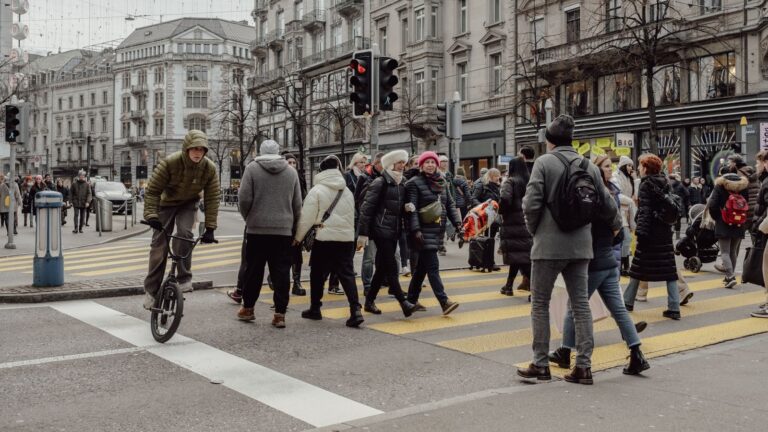
If I had to explain Zurich style to someone in ten minutes, I would not start with brands. I would stand them near a crossing and ask them to watch coats, shoes and bags. Zurich tells the truth from the outside in: first the weather layer, then the walking shoe, then the useful object carried all day.
Pick one lens before reading the guide
Choose “shopping,” “people-watching,” “Swiss designers,” or “what should I wear tomorrow?” The city becomes clearer when you read it through one lens at a time instead of trying to swallow all of Zurich fashion in one elegant bite.
I am going to be candid: Zurich does not reveal its fashion scene to people who expect Milan drama or Berlin chaos. The city has a different code. It rewards clothes that work in real life, pieces that look better close up than from across the street, and outfits that make sense on trams, in offices, at the lake, in galleries and at dinner. That is why the best Zurich fashion route is not a straight shopping sprint. It is a slow reading of neighbourhoods.

Start With The Zurich Style Code
The easiest mistake is to ask, “Where are the cool shops?” before asking, “What does Zurich consider stylish?” In Zurich, style often sits between three forces: wealth, function and restraint. You see wealth on Bahnhofstrasse, but local taste usually avoids over-explaining it. You see function in shoes that can survive cobblestones, rain and a tram transfer. You see restraint in the way many outfits edit colour, print and logos down to one clear idea.
This is why the city can look understated at first. The interesting detail is rarely the obvious logo. It is the weight of a coat, the sharpness of a trouser break, the confidence of wearing practical boots with a beautiful bag, or the way someone combines vintage denim with an immaculate wool blazer. Zurich fashion is not only luxury. It is controlled practicality with small signs of taste.
If you are new to the city, read people at crossings and tram stops. Notice shoes first. Zurich shoes tell the truth because the city demands walking. Then notice outerwear, because coats do much of the social work here for half the year. Finally, notice bags. A bag in Zurich must carry a laptop, groceries, gym clothes or a rain layer, but it still needs to look intentional. That is the Zurich formula: life first, style never abandoned.
Bahnhofstrasse: Polish, Watches And Controlled Luxury
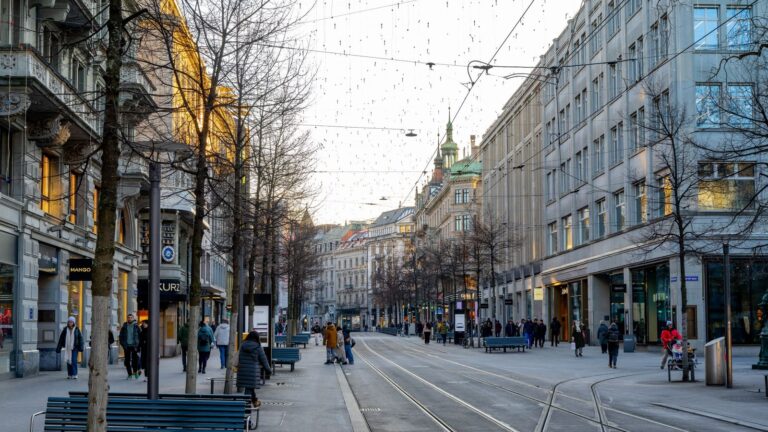
Begin with Bahnhofstrasse because it is Zurich’s clearest lesson in polished fashion. Switzerland Tourism describes the street as running 1.4 kilometres from the main railway station to Lake Zurich, with fashion chains, watch and jewellery stores, department stores and Paradeplatz along the route. The official facts matter, but the mood matters more: Bahnhofstrasse teaches you what Zurich considers visible prestige.
My advice is to walk it slowly from the station toward the lake. Near the main station, the mood is more mixed and practical. As you move toward Paradeplatz and the lake, the retail language becomes more expensive, more precise and more international. This gradient is useful. It shows how Zurich moves from daily utility into luxury without changing streets.
Use Bahnhofstrasse as a reference point, not as the whole answer. If you only shop there, you may think Zurich fashion is only watches, luxury leather and neat tailoring. That would be too flat. The better way is to use it as the “polish” chapter of the city, then compare it with the smaller, more personal areas. For a deeper commercial route, I would pair this guide with my Bahnhofstrasse Zurich shopping guide, because that page goes further into where luxury shopping actually makes sense.
Old Town: Small Boutiques And Swiss Design Clues
The Old Town is where Zurich becomes more personal. Zurich Tourism notes that shopping in Zurich’s Old Town mixes small traditional stores with creative boutiques, young and established businesses, fashion boutiques, watch stores and Swiss design. That density matters. In a few narrow streets, you can move from polished souvenirs to serious design objects to independent fashion.
What I look for here is not volume. I look for a point of view. The Old Town is good for discovering how Zurich handles charm without becoming cute. The best pieces here often have one memorable detail: a colour, a textile, a handmade finish, an unusual shoe shape or an accessory that feels a little less predictable than Bahnhofstrasse. It is also a good area for visitors who want something that feels Swiss without buying a cliche.
There is a sociological reason the Old Town works for fashion. The buildings are old, the streets are narrow, and the pace is slower. That changes how clothes are seen. A glossy outfit can look too loud here, but a textured coat, a silk scarf, beautiful flats or a small structured bag can feel exactly right. Zurich’s restraint is not only personality. It is architecture. The city edits the outfit before the mirror does.
Im Viadukt: Zurich-West Design Energy
If Bahnhofstrasse is polish and the Old Town is character, Im Viadukt is Zurich’s design metabolism. Switzerland Tourism describes the Viaduct Arches as a 550-yard urban meeting place under a railway viaduct built in 1894, with 36 arches holding a mix of delicatessens, studio galleries, sport and fashion boutiques, plus a Market Hall with local vendors. That is the official description. The style lesson is this: Zurich fashion becomes more contemporary when it leaves the obvious luxury corridor.
Im Viadukt is where I would send someone who wants to understand the city’s creative side without pretending Zurich is an underground fashion capital. The area is curated, urban and practical. It is not messy in the romantic sense. It still feels Swiss. But it gives more space to design stores, independent labels, useful bags, sneakers, outdoor-adjacent pieces and clothes that sit between work and weekend.
The best way to shop Im Viadukt is to touch fabrics and compare silhouettes. Zurich-West style is often about proportion: wider trousers, sharper outerwear, cleaner sneakers, a bag that looks architectural rather than decorative. If you are building a wardrobe here, do not ask, “Is this trendy?” Ask, “Will this make the rest of my wardrobe look more intentional?” That question is very Zurich.
If you want a dedicated route through the arches, open my Im Viadukt Zurich shopping guide after this article. It is one of the most important supporting pages for understanding the city’s design-shopping mood.
Zurich Fashion Areas Compared
To make the city easier to read, I use neighbourhoods as style moods. This is not a scientific ranking. It is a practical editor’s map for deciding where to go first, especially if you only have one afternoon.
| Area | Style Signal | Best For | What To Notice |
|---|---|---|---|
| Bahnhofstrasse | Luxury polish | Watches, leather goods, premium basics, department stores | How Zurich keeps expensive fashion controlled rather than theatrical |
| Old Town | Small-scale character | Boutiques, Swiss design details, accessories, gifts with taste | Texture, colour, handmade feeling and personal edits |
| Im Viadukt and Zurich-West | Contemporary design | Concept stores, bags, sneakers, practical design, casual tailoring | Proportion, materials and pieces that work beyond one season |
| Vintage and second-hand routes | Individuality with history | Designer resale, denim, coats, unusual accessories | Quality labels, condition, fit and whether the piece modernises easily |
| Lake and Seefeld mood | Relaxed refinement | Elegant casual outfits, summer dresses, linen, clean knitwear | How Zurich softens luxury when people move from office to water |
Where The Real Zurich Fashion Scene Hides
Many people look for Zurich fashion in the wrong emotional register. They expect spectacle. Zurich is more about editing. The scene hides in small decisions: a repaired bag instead of a new one, a vintage blazer over a plain T-shirt, a Swiss designer scarf with an otherwise quiet outfit, or an expensive coat worn so casually that it does not perform wealth.
That is why I always include boutiques, vintage and sustainability in the same conversation. Zurich’s fashion identity is not only “buy new.” It is also “buy better,” “buy less,” “repair it,” “resell it” and “make the outfit feel like you.” If you want a precise boutique list, my best fashion boutiques in Zurich guide is the natural next stop. If you want the more circular side of style, use my best vintage shops in Zurich guide and compare it with the broader second-hand scene.
Here is the local nuance competitors often miss: vintage in Zurich does not have to look bohemian. In this city, second-hand can look extremely polished because shoppers care about fabric, labels, condition and fit. A pre-loved wool coat can feel more Zurich than a new micro-trend piece, especially if the shoulders sit correctly and the shoes are clean.
Swiss Designers Make The Guide More Serious
A Zurich fashion guide should not only point to streets. It should explain why Swiss fashion feels the way it does. Switzerland has a long relationship with textiles, precision, function and restraint. You see those values in fashion houses, bag brands, independent designers and even in how shoppers evaluate a seam or a fabric. The Swiss eye is often less interested in drama than in whether the object is made intelligently.
This is where Zurich becomes more interesting than its reputation. The city may not shout like larger fashion capitals, but it has a strong design intelligence. That intelligence shows up in the preference for clean lines, durable materials, excellent outerwear and objects that solve a problem. A bag is rarely just decoration here. A coat is not only a silhouette. Shoes are not only a trend. Zurich asks clothes to earn their place.
If you want to understand the names behind that mindset, read my guide to Swiss fashion designers you should know. It gives this Zurich route a wider Swiss context and helps separate real design identity from generic “minimalist” marketing.
The Sustainable Side Of Zurich Style
Sustainability in Zurich is not only a moral slogan. It often looks like practical adulthood. People repair things. They buy fewer pieces. They care about whether something can survive weather, commuting and repeated wear. In a city where a good coat, shoes and bag do so much daily work, cheap trend turnover quickly feels inefficient.
This does not mean every Zurich shopper is perfectly sustainable. Of course not. But the city’s style culture gives sustainable fashion a better chance than in places where novelty is the whole point. A timeless coat, a repaired leather bag, a second-hand designer piece or a well-made Swiss accessory can all fit the same visual language: restrained, useful, composed.
For readers trying to shop more responsibly, I would connect this guide with two practical pages: sustainable fashion brands in Zurich and where to buy clothes in Zurich without fast fashion. The first helps with brand discovery. The second is more about behaviour: where to shop, how to judge value and how to avoid buying disposable clothes just because they are convenient.
Zurich Fashion Week Changes The Conversation
Zurich’s fashion ecosystem also deserves attention because the city is becoming more organised around fashion as a cultural field. The Zurich Convention Center’s page for Zurich Fashion Week 2026 says the event aims to strengthen the local creative economy, support young talent and include sustainability days with circular-economy principles where possible. I like this because it points to the future Zurich should build: not a copy of another fashion week, but a Swiss platform where design, sustainability and culture are taken seriously together.
My strong opinion is that Zurich should not try to become Paris, Milan or Copenhagen. It should become a more articulate version of itself. The city’s advantage is not theatricality. It is trust, quality, cross-disciplinary design and a public that understands why material choices matter. If Zurich Fashion Week leans into that, it could give Swiss fashion a clearer stage without losing the restraint that makes it distinct.
For readers, this means the Zurich fashion scene is worth watching now. The local style language is already there on the street. What is changing is the visibility of the people and platforms around it.
What To Wear While Exploring Zurich Fashion
Your outfit matters because Zurich is a walking city. If you are doing a fashion route, dress for movement first. Wear shoes that can handle cobblestones, polished streets and stairs. Bring a layer. Choose a bag that leaves your hands free. The most Zurich outfit for shopping is not the one that photographs best in a hotel mirror. It is the one that still feels elegant after five hours of walking, trying things on, drinking coffee and getting on a tram.
A good formula is simple: straight or wide trousers, clean leather shoes or refined sneakers, a knit or crisp shirt, a structured coat, a practical bag and one personal detail. The personal detail could be a scarf, jewellery, a vintage belt, coloured socks or an unusual texture. Keep the rest calm. Zurich notices over-effort quickly.
Season also changes the route. In winter, outerwear is the outfit. In summer, linen, cotton, sunglasses and sandals become more visible, but the city still avoids beachy chaos in the centre. If you need a practical seasonal breakdown, my what to wear in Zurich guide is built exactly for that.
A Half-Day Zurich Fashion Route
If I had only half a day with a visitor who cares about style, I would not try to cover everything. I would edit the route tightly.
- Start at Bahnhofstrasse: Walk from the main station toward Paradeplatz and read the luxury language: coats, shoes, watches, leather goods and how people dress for expensive surroundings.
- Turn into the Old Town: Look for smaller shops, accessories, Swiss design details and pieces with more personality than a global flagship store.
- Take the tram to Zurich-West: Use Im Viadukt as the contemporary design counterpoint. Notice bags, sneakers, everyday tailoring and practical materials.
- Finish with vintage or coffee: Add one second-hand stop if your energy is still good. Zurich’s best finds often require patience, not speed.
This route works because it shows contrast. You see money, history, design and circular fashion in one sequence. You also avoid the mistake of treating Zurich fashion as one aesthetic. The city is restrained, yes, but restraint has many dialects.
Common Mistakes Visitors Make
The first mistake is overdressing for luxury shopping. Zurich is affluent, but it is not usually theatrical. A head-to-toe logo outfit can look less confident here than one excellent coat and quiet shoes. The second mistake is underestimating weather. A beautiful outfit that collapses in rain does not feel stylish in Zurich. The third mistake is buying generic souvenirs when Swiss design, vintage and local fashion offer more interesting memories.
The fourth mistake is thinking expensive automatically means Zurich. It does not. Zurich style is closer to quality plus judgement. A well-cut second-hand blazer can look more convincing than a new designer piece chosen only for the label. A practical bag can feel more local than a tiny evening bag at noon. An outfit with one sharp proportion can beat an outfit with five expensive signals competing for attention.
The final mistake is moving too fast. Zurich’s fashion scene rewards slow looking. Check seams. Try things on. Walk away and return if the piece stays in your mind. Ask whether the garment will make your real life better. That sounds practical because it is. Zurich is stylish when it is honest about use.
Bottom Line
The best Zurich fashion guide is not a list of addresses; it is a way of seeing the city. Bahnhofstrasse teaches polish, the Old Town teaches character, Im Viadukt teaches contemporary design, vintage teaches individuality, sustainable fashion teaches restraint, and Swiss designers explain the deeper logic behind it all. If you understand those layers, Zurich stops looking plain. It starts looking disciplined, specific and quietly confident.
Where to go deeper next
If this Zurich fashion guide is your starting point, the next layer is the daily dress code. I would read how people dress in Zurich first, then compare it with Zurich street style by district. Those two articles explain the local signals you will see on trams, near the lake and around Bahnhofstrasse.
For practical outfit planning, use the seasonal guides: Zurich winter coat rules, Zurich summer outfit ideas and how to layer clothing for Zurich weather. If you want the wider cultural comparison, my Zurich vs Geneva style guide shows why the same money reads differently in Zurich, Geneva and Milan.
FAQ
What is the best area for fashion in Zurich?
Bahnhofstrasse is best for luxury polish, the Old Town is best for small boutiques and Swiss design details, and Im Viadukt is best for contemporary Zurich-West design energy. For a complete view, visit all three rather than choosing only one.
Is Zurich a fashionable city?
Yes, but Zurich is fashionable in a restrained Swiss way. The city values quality, practicality, grooming, good outerwear, clean shoes and subtle design signals more than obvious trend performance.
Where should I shop for local style in Zurich?
Start with boutique and design areas rather than only global luxury stores. The best route combines Bahnhofstrasse, the Old Town, Im Viadukt, vintage shops and sustainable fashion stores.
What should I wear for shopping in Zurich?
Wear comfortable polished shoes, a good coat or layer, simple trousers, a practical bag and one personal detail. Zurich is walkable and weather-sensitive, so elegance needs to function.
Is Zurich fashion mostly luxury?
No. Luxury is visible on Bahnhofstrasse, but Zurich fashion also includes independent boutiques, vintage, second-hand, sustainable brands, Swiss designers and practical everyday style.