Zurich vs Geneva Style: Why Milan Changes the Look
Last updated: June 21, 2026.
Zurich vs Geneva style is not a fight about who dresses better. It is a lesson in how money learns different manners. Put the same budget into Zurich, Geneva and Milan, and it does not buy the same look. In Zurich it buys control. In Geneva it buys polish with a diplomatic accent. In Milan it buys confidence that wants to be seen.
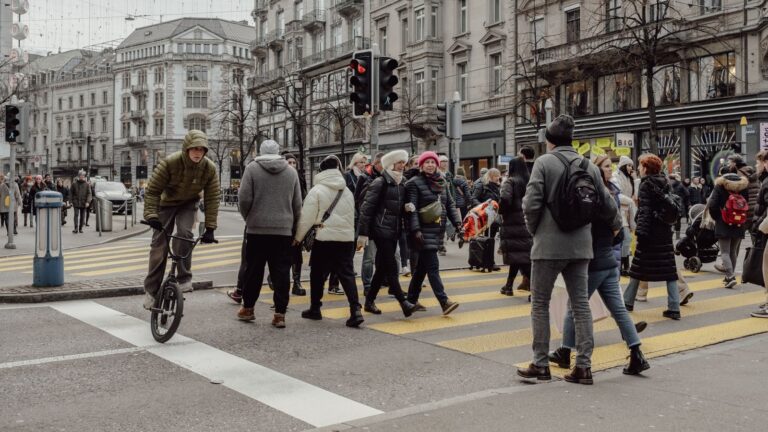
I think about this whenever I watch people near Bahnhofstrasse, then compare that memory with Geneva’s lakefront watch-and-jewellery rhythm and Milan’s fashion-week street energy. The clothes may cost similar amounts. The social message changes completely. A grey coat in Zurich says, I know the rules. A silk scarf in Geneva says, I know the room. A dramatic shoe in Milan says, I know you are looking.

Why the same budget behaves differently
Money does not have one style. It copies the city around it. Zurich asks expensive clothes to behave. Geneva lets them look a little more finished. Milan expects them to perform. This is why a luxury bag can feel understated in one city, formal in another and almost too quiet in the third. The object is the same. The audience is not.
In Zurich, I notice proportion before brand. The coat closes properly. The shoe is clean. The colour palette rarely argues with the weather. Even when people wear expensive things, they often make the piece look practical. That is why my guide to how people dress in Zurich keeps returning to restraint: the city reads taste through discipline.
Geneva has a different kind of restraint. It feels more international, more formal, sometimes more ceremonial. Watches and jewellery sit closer to the surface. Tailoring can look softer, scarves matter more, and the French-Swiss influence makes polish feel less severe. Milan then changes the whole temperature. Clothes there do not only solve the day. They create a moment.
Zurich style: expensive things made quiet
If I had to reduce Zurich style to one sentence, I would say this: the best-dressed people here make effort hard to prove. That can frustrate visitors who expect visible luxury. But once your eye adjusts, the signs appear everywhere: matte leather, good wool, clean sneakers, a coat with the right shoulder, a watch that does not need to shout, trousers hemmed for real walking.
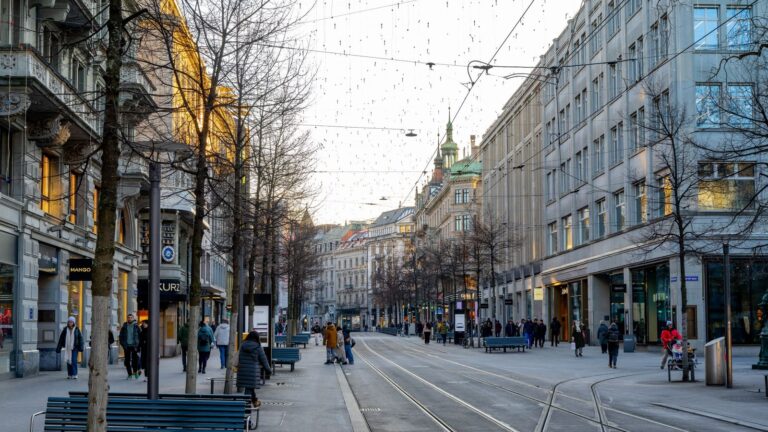
Zurich Tourism treats Bahnhofstrasse as one of the city’s key shopping streets, known for department stores, boutiques, watches, jewellery and the route from the main station toward the lake. That geography matters. Bahnhofstrasse is not only retail. It is a social runway for Swiss control: finance, shopping, commuters, tourists, trams and polished windows all sharing the same pavement.
Compared with Milan, Zurich rarely rewards theatrical dressing during the day. Compared with Geneva, it feels less formal and less decorative. The local sweet spot is utility with expensive finishing. A soft cashmere sweater is allowed to look like a normal sweater. A leather tote should look useful, not needy. Even a luxury coat often gets styled with boots that can survive rain, tram stops and a walk to the lake.
This is why Zurich style connects so naturally with quiet luxury Switzerland. But I would not call it trend-based. The city dressed this way before the phrase became popular online. Zurich did not suddenly discover low-key wealth. It simply kept doing what it already liked: clean lines, good materials and very little emotional noise.
Geneva style: diplomacy, watches and softer polish
Geneva style feels close to Zurich at first glance because both cities understand wealth and both dislike looking careless. But the mood changes as soon as you pay attention to the details. Geneva has more diplomatic gloss. It carries the influence of international organisations, hotels, watchmaking, lakefront elegance and French-speaking Switzerland. The result is polished, but less dry.
I read Geneva through finishing touches: a silk scarf, a softer trouser, a more visible watch, a neater blow-dry, a tailored coat that feels less businesslike than Zurich’s version. The look can be conservative, but not always minimal. It leaves a little more room for jewellery, perfume, fine leather and colour near the face. If Zurich asks, does this work? Geneva asks, is this appropriate?
Travel writing about Geneva often points readers toward luxury shopping, watchmaking and the lakeside city centre. Condé Nast Traveler, for example, includes Rue du Rhône and high-end shopping in its Geneva recommendations. I use that not as a shopping instruction, but as a clue: Geneva’s fashion language sits close to watches, jewellery and international polish.
For Zurich readers, Geneva can look slightly more dressed. For Milan readers, it may look too cautious. That is the point. Geneva does not dress for street spectacle. It dresses for rooms where status should be legible, but not disruptive. The same coat that looks almost formal in Zurich can feel normal in Geneva because the whole social setting expects a little more ceremony.
Milan style: confidence as a public language
Milan changes the question. In Zurich and Geneva, I often ask what a piece signals quietly. In Milan, the question becomes whether the outfit has enough presence. This does not mean everyone in Milan dresses loudly. The city knows tailoring, black, camel, navy and restraint too. But Milan gives visible fashion more permission. A stronger shoulder, a sharper shoe, a flash of colour, a better trouser break – these things feel at home there.
That permission comes partly from the city’s fashion infrastructure. Milan is not only a place where people buy clothes. It is a place where clothes become industry, calendar and street theatre. Vogue announced Vogue World: Milan for September 22, 2026, tied to the opening day of Milan Fashion Week. That kind of event gives the city a public fashion pulse that Zurich and Geneva do not have in the same way.

When I compare Milan with Zurich, the difference is not simply Italian drama versus Swiss modesty. That would be too easy. The deeper difference is audience. Milan assumes fashion can be part of public conversation. Zurich treats fashion more like private competence. Geneva treats it like social fluency. This is why Milan can make the same expensive coat feel more alive. The city allows the wearer to animate it.
The comparison table I actually use
If someone asked me to explain Zurich vs Geneva style without a lecture, I would use this table. It is not about stereotypes. It is about which signals each city rewards most often.
| City | Main style signal | What money buys | Best pieces | Common mistake |
|---|---|---|---|---|
| Zurich | Control, quality, usefulness | Better fabric, cleaner fit, low-logo polish | Wool coat, leather sneakers, fine knit, quiet bag | Buying visible luxury that feels too eager for the city |
| Geneva | Diplomatic polish and watch-world formality | Tailoring, accessories, jewellery, fine leather | Silk scarf, tailored coat, watch, elegant loafer | Forgetting that polish matters more than trend |
| Milan | Presence, proportion, fashion confidence | Sharper silhouette, stronger styling, more visible taste | Statement coat, sculptural shoe, sunglasses, dramatic trouser | Copying street-style drama without personal ease |
A visual style-signal chart
This is how I would map the three cities by signal. The numbers are not scientific. They are a practical way to explain what the eye notices first.
City Style Signal Index
What the same CHF 1,500 might buy
The title of the content plan says it well: the same money buys a different look. Imagine a CHF 1,500 wardrobe decision. In Zurich, I would spend it on one excellent coat, a knit and shoes that handle real pavements. In Geneva, I might put more of that money into a tailored coat, a scarf and one refined accessory. In Milan, I would think harder about silhouette: a coat with stronger shape, shoes with attitude, sunglasses that do not look apologetic.
The Zurich version gives you the most day-to-day usefulness. It will likely age well because it avoids obvious trend markers. The Geneva version gives you polish in social settings where small details carry weight. The Milan version gives you the strongest visual memory. It may be less useful every day, but it can teach you proportion faster than a month of cautious shopping.
This is why I rarely tell readers to copy another city’s style exactly. I prefer translation. If you live in Zurich, borrow Milan’s confidence in shoes or sunglasses, not the whole fashion-week outfit. Borrow Geneva’s scarf discipline, not its full diplomatic tone. Keep Zurich’s fabric standards. That mix usually works better than importing a complete look that fights the street around you.
For practical Zurich shopping decisions, I would pair this article with the Zurich shopping map. It helps you decide whether your money belongs on Bahnhofstrasse, in the Old Town, in Zurich-West or in a vintage route.
Colour tells the truth first
Colour is one of the fastest ways to read the difference. Zurich loves controlled neutrals, but not only black. I see navy, charcoal, camel, stone, cream, dark green and softened brown. The palette often looks practical because the weather and commute matter. Bright colour appears, but it usually enters through a scarf, sock, knit, bag lining or sneaker detail rather than a full outfit.
Geneva can carry lighter polish more easily: ivory, soft blue, taupe, pearl grey, navy, deep burgundy, silk prints, gold hardware. The effect is still controlled, but it feels more finished around the face and hands. Milan has the widest range because contrast itself feels more accepted. Black can look severe and chic. Camel can look sensual. Red, acid green, pale pink or metallics can work if the silhouette knows what it is doing.
This is where my Zurich street style guide connects with the comparison. Zurich changes by district, but the city still returns to controlled colour. Milan changes by mood. Geneva changes by occasion. If you understand that, you stop asking, can I wear this? and start asking, what will this say here?
Shoes reveal the city faster than bags
Bags get attention, but shoes tell the truth. Zurich shoes must survive walking, trams, rain and quick changes of plan. That is why clean sneakers, ankle boots, loafers with grip and simple leather shoes make so much sense here. A shoe can be expensive, but it should still look useful. If it looks fragile, Zurich becomes suspicious.
Geneva shoes can look a little finer. Loafers, polished boots, elegant flats and dress shoes feel natural because the city has more formal social codes. Milan shoes often carry more personality. A sculptural heel, a sharper boot, a square toe, a strong sneaker or a glossy loafer can change the outfit before the coat even speaks. Milan understands footwear as punctuation.
For Zurich specifically, this is why my Zurich business dress code article spends so much time on shoes. In a city where clothes rarely shout, footwear becomes evidence. It tells people whether you understand weather, work, money and care.
How to dress with influence from all three cities
The best wardrobe lesson is not to choose one city and obey it forever. I would build the base from Zurich, the polish from Geneva and the courage from Milan. Start with Zurich’s useful quality: a coat that closes well, knitwear that feels good, trousers with the right length, shoes that can handle the day. Add Geneva’s finishing: a scarf, a better watch strap, a cleaner bag, a pressed shirt. Then add one Milan move: stronger sunglasses, a sharper shoe, an unexpected colour or a coat with more shape.
The trick is to keep the Milan move singular. Zurich will tolerate one expressive element if the rest of the outfit behaves. A dramatic boot with a quiet coat works. Loud boots, loud bag, loud sunglasses and loud coat will feel like a costume unless your personality carries it easily. Geneva is similar, but it may prefer the expressive element to be refined. Milan is more forgiving because visual confidence belongs to the city rhythm.
If you are still building your local eye, start with my Zurich fashion guide. Then use this comparison to decide what to borrow from outside Switzerland. The goal is not to look less Zurich. It is to make Zurich style feel more personal.
The sociology behind the difference
Fashion is never only fabric. It is a public negotiation. Zurich, Geneva and Milan each teach people what kind of visibility feels acceptable. Zurich often treats visibility as a risk. Geneva treats it as protocol. Milan treats it as pleasure. That difference changes how people buy, style and judge the same objects.
A logo bag in Zurich can look too direct if the rest of the outfit lacks restraint. In Geneva, it may read as part of a polished luxury code. In Milan, it can become one piece in a larger composition. None of these readings is universal, and none is morally superior. They simply prove that taste lives in context. The city finishes the outfit after you leave the mirror.
This is why the fashion sociology layer matters for Zurich Fashion Blog. Local guides bring search intent, but sociology explains why the guide is worth reading. A shopping street is not just a shopping street. It is a classroom for status, gender, class, climate, work and belonging. Clothes carry all of that, whether we admit it or not.
My final rule
For daily life in Zurich, I would not dress like Milan. I would borrow from Milan. I would not dress like Geneva either. I would borrow from Geneva. Zurich style works best when it keeps its base calm and lets one detail carry the personality. A better shoe, a silk scarf, a warmer colour, a sharper coat, a bag with shape. That is enough.
The same money can buy three different selves. Zurich gives you competence. Geneva gives you refinement. Milan gives you presence. The most interesting wardrobe does not choose one and reject the others. It learns which signal the day needs.
FAQ: Zurich vs Geneva style
What is the main difference between Zurich and Geneva style?
Zurich style is usually more practical, restrained and fabric-focused. Geneva style often feels more formal, polished and accessory-aware because of its watchmaking, diplomatic and French-Swiss influences.
Is Zurich style more understated than Geneva style?
Yes, in many everyday settings. Zurich tends to hide effort through clean fit, muted colour and practical quality. Geneva also values restraint, but it often allows more formal accessories, scarves, jewellery and watch-world polish.
How does Milan style compare with Zurich style?
Milan gives visible fashion more permission. Zurich often rewards quiet competence, while Milan rewards presence, proportion and confidence. A strong shoe or statement coat can feel natural in Milan and more deliberate in Zurich.
What should I borrow from Milan if I live in Zurich?
Borrow one expressive detail at a time: sharper shoes, better sunglasses, a stronger coat shape or a richer colour. Keep the rest of the outfit calm so the look still fits Zurich’s restrained city style.
Which city is best for quiet luxury style?
Zurich is strongest for quiet luxury in daily life because it values quality without loud display. Geneva is better for formal polish, while Milan is better for fashion confidence and expressive styling.
Does the same luxury item look different in each city?
Yes. A luxury bag, coat or shoe changes meaning with the city around it. In Zurich it may read as competence, in Geneva as refined polish, and in Milan as part of a more public fashion statement.