Quiet Luxury Switzerland: Dress Expensive Without Logos
Quiet luxury Switzerland is not about looking rich in beige. It is about looking composed without needing a logo to explain the outfit: excellent outerwear, clean shoes, controlled colour, natural fabrics, good grooming and a bag that works in real life. In Zurich, the best version is practical, almost unsentimental, and much sharper than the online “old money” costume.
The Beige-Coat Lie Detector
Quiet luxury becomes boring the second it turns into beige obedience. In Switzerland, the real test is not whether the outfit looks expensive in a mirror. It is whether the coat, shoe, bag and fabric still look composed after rain, stairs, trams and a long ordinary day.
I understand why the phrase became fashionable. People are tired of loud branding, trend churn and outfits that seem designed more for a photo than for a day. But in Switzerland, quiet luxury has a different tone. It is less about fantasy estates and more about discretion, quality, maintenance and not making the room work too hard to understand you.
That is why I prefer the Swiss version. It is not soft-focus luxury. It is a discipline. A coat has to hang well. Leather has to be cared for. Knitwear has to keep its shape. Shoes have to survive pavement and rain. The outfit should look good when you are walking from a tram stop to dinner, not only when you are standing under perfect lighting.
What Quiet Luxury Switzerland Actually Means
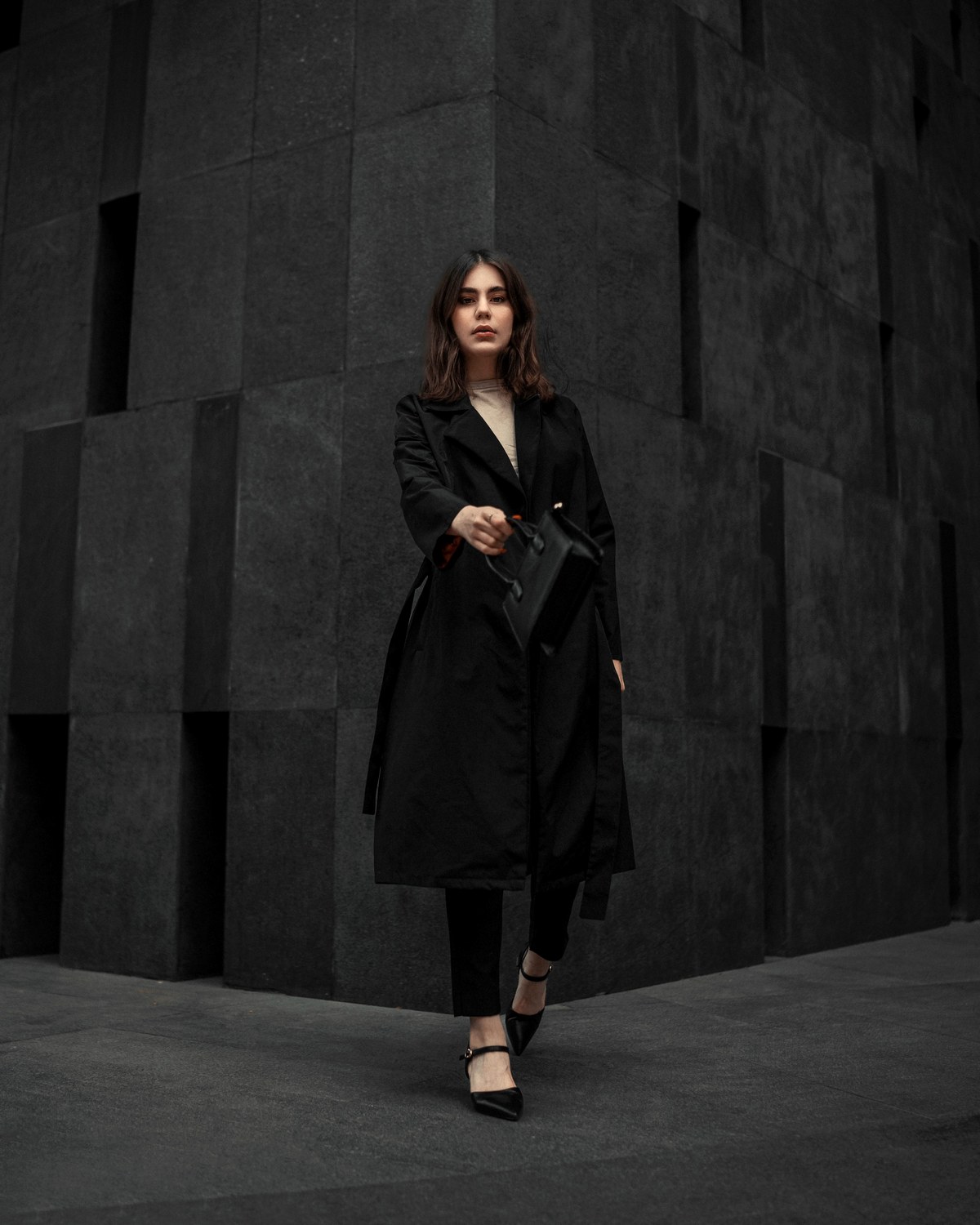
Quiet luxury Switzerland means restraint with evidence. The outfit does not shout, but it gives small signs that someone has paid attention: a dense wool coat, a sleeve length that is right, trousers that break cleanly over the shoe, polished leather, a silk scarf worn casually, not theatrically. The point is not invisibility. The point is control.
This is where Swiss style differs from the internet trend. Online, quiet luxury often becomes a beige mood board: cream knit, camel coat, gold earrings, slick hair, expensive bag. In Zurich, that can look too staged. Real local elegance is more weather-aware and less decorative. It includes navy, charcoal, black, taupe, stone, deep green, good denim and practical shoes. It knows that rain exists.
I also see a social difference. In some cities, luxury wants to be recognized. In Zurich, recognition often happens quietly. People notice the fabric, the cut, the watch, the shoe, the absence of fuss. The most expensive-looking person in the room is not always the person wearing the most expensive piece. Often it is the person whose clothes do not fight each other.
Quiet Luxury vs Logo Luxury vs Beige Trend
The easiest mistake is confusing quiet luxury with plain clothing. Plain is not enough. A badly cut beige coat is still a badly cut coat. The second mistake is thinking logos are always vulgar. They are not. But a visible logo changes the conversation: the outfit asks to be read through brand recognition rather than through taste, proportion and material.
| Style mode | What it relies on | How it reads in Zurich |
|---|---|---|
| Quiet luxury | Fabric, fit, maintenance, restraint | Confident, adult, polished without showing off |
| Logo luxury | Brand recognition and status signalling | Can work, but easily feels too loud for everyday Swiss style |
| Beige trend | A neutral colour palette without enough structure | Often looks flat unless the cut and texture are excellent |
| Minimalism | Reduction, clean lines, fewer details | Very Swiss when the outfit still has warmth and personality |
Why Switzerland Understands Quiet Luxury So Well
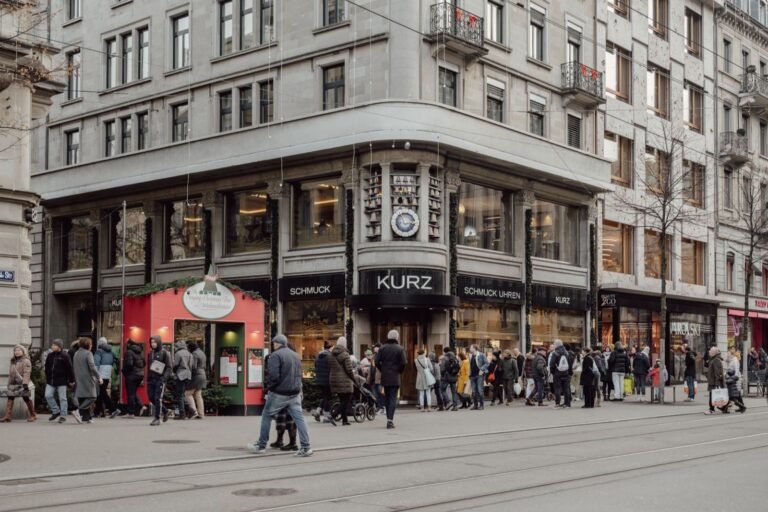
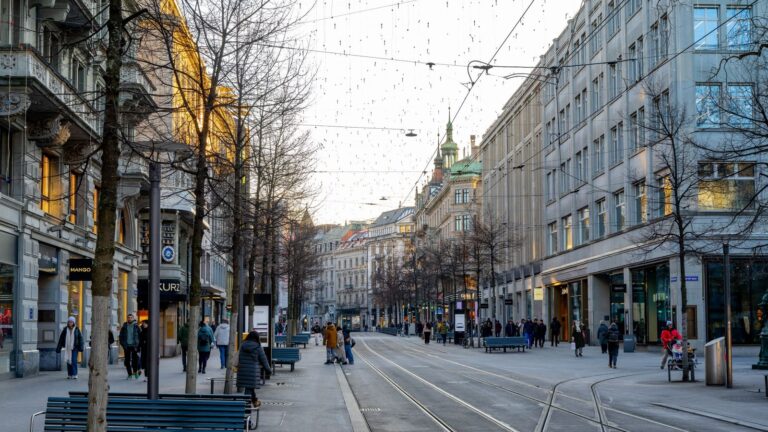
Switzerland has a long habit of valuing precision without spectacle. That does not mean Swiss people are naturally minimalist saints. Walk down Bahnhofstrasse and you will see plenty of obvious wealth. But the most persuasive Swiss luxury usually has a different center of gravity. It is technical, material and exacting.
St. Gallen is part of that story. The region has a deep textile history; St.Gallen-Bodensee Tourism notes Eastern Switzerland’s reputation for high-quality fabrics and embroidery, with embroidery becoming a major source of income around 1850. That history matters because Swiss luxury has never only been about the finished garment. It has also been about what lies beneath: fabric, technique, finishing and restraint.
This is why I find Swiss quiet luxury more interesting than the viral trend. It is not only an aesthetic. It is connected to textile knowledge, climate, maintenance and a cultural preference for not overexplaining yourself. The detail many visitors miss is that Swiss understatement is not the same as indifference. Often it is the opposite: a lot of care made to look calm.
Akris Is the Swiss Reference Point
If one Swiss fashion house explains this idea best, it is Akris. Akris traces its origin to Alice Kriemler-Schoch, who opened an apron atelier in St. Gallen in 1922 and worked with St. Gallen cotton and embroidery. That origin is important because it is not a story of flashy branding. It is a story of fabric, local skill and clothing for women who needed elegance with purpose.
The house still represents Swiss quiet luxury in a very precise way. Akris describes itself through double-face fabrics, cashmere, St. Gallen embroidery, digital photo printing and accessories such as the Ai bag. What interests me is not only the price level. It is the logic: the value is embedded in construction, textile and line, not in making the logo do the work.
You do not need to own Akris to learn from it. Look at the principles: clean silhouette, excellent fabric, ease, movement, a lack of unnecessary decoration. This is the useful part for everyday Zurich style. The lesson is not “buy the luxury brand.” The lesson is “understand why the piece looks expensive.”
The Zurich Outfit Formula: Coat, Shoes, Bag, Grooming
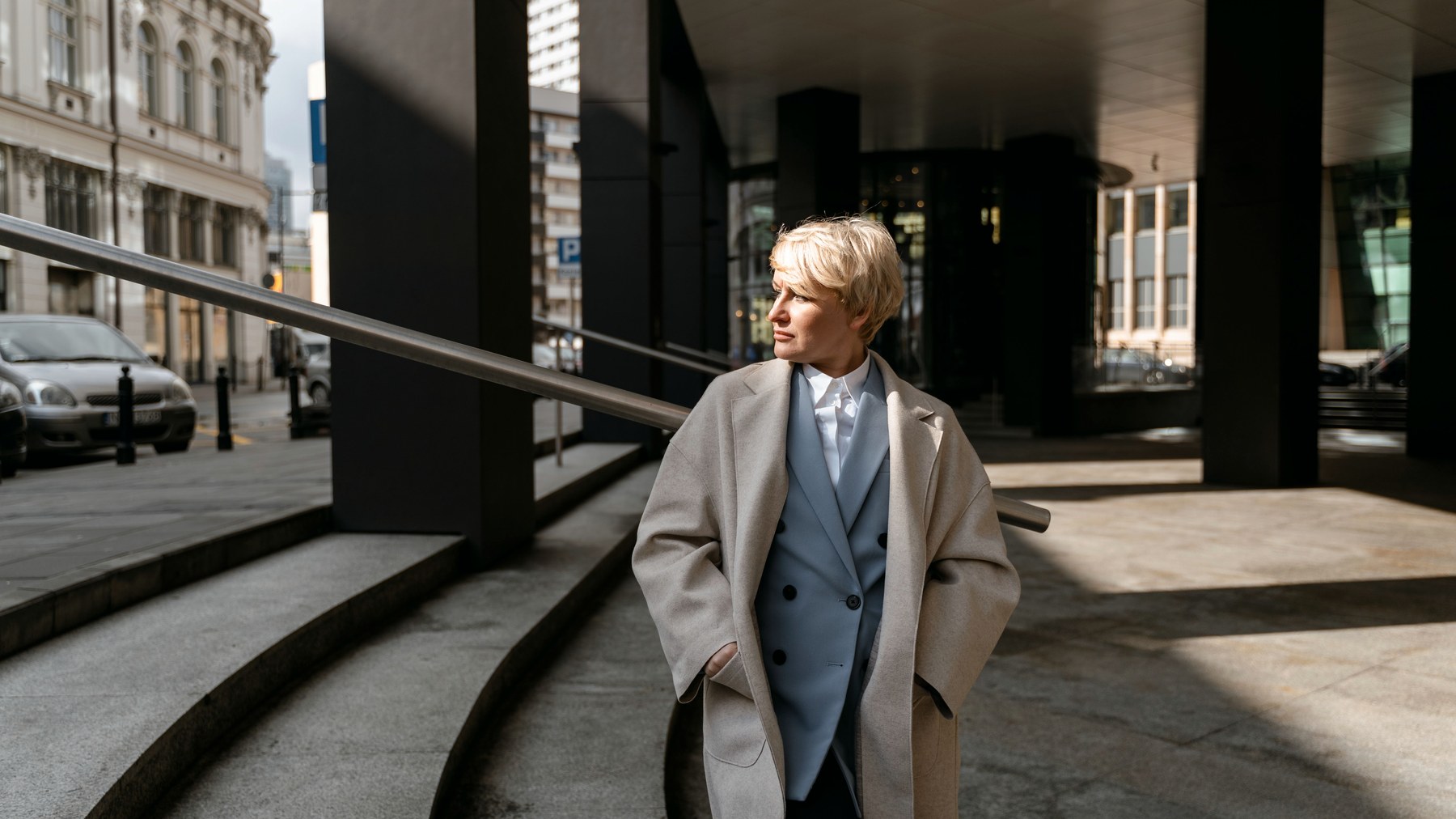
In Zurich, quiet luxury begins with the outer layer because the coat is visible for much of the year. A good coat makes a simple outfit look intentional. A weak coat makes expensive pieces underneath look tired. I would choose wool or a good wool blend, a clean shoulder, enough length to feel adult, and a colour that works with your actual life: charcoal, navy, camel, black, taupe, olive or deep brown.
Shoes come next. This is where many outfits collapse. The Swiss version of looking expensive has very little patience for damaged heels, dirty sneakers or leather that has clearly never seen cream. You do not need a large shoe wardrobe. You need a few pairs that are clean, shaped and appropriate: leather ankle boots, loafers, simple trainers, a refined flat, a weather-friendly boot. The shoe should make the outfit sharper, not merely complete it.
The bag should be functional and quiet. I like this because it keeps the outfit honest. If a bag is beautiful but annoying to carry, it is not luxurious in Zurich life. QWSTION’s Zurich store, for example, talks about repair services and product longevity, which is exactly the kind of practical thinking that fits Swiss no-logo style. A useful bag with good proportions often looks more expensive than a logo bag that has nothing to do with the outfit.
The Colour Palette Is Quiet, But Not Dead
Quiet luxury in Switzerland does not have to be beige. In fact, too much beige can look strangely artificial here, especially in winter when the city is already grey. I prefer a palette that feels grounded: charcoal, black, ivory, navy, taupe, stone, chocolate, camel, bottle green, slate blue and soft white. These colours work because they let fabric and shape become visible.
The trick is contrast. A black coat over black trousers can look elegant if one surface is wool, another is leather, and the knit has depth. A cream sweater under a navy coat can look richer than a full beige outfit because the contrast gives the eye something to hold. A dark green coat can feel more Swiss than camel because it has restraint without copying the internet mood board.
I would avoid building a wardrobe from only pale neutrals unless you are very disciplined with fabric and care. Zurich weather is not kind to fragile fantasy dressing. Cream trousers on wet days, suede with no protection, flimsy pale coats near tram seats: this is where the online aesthetic meets reality. Quiet luxury should make life easier, not more precious.
Fabric Is the Real Status Signal
The fastest way to understand no-logo dressing is to touch the clothes. Fabric tells the truth before the label does. Dense wool, crisp cotton poplin, silk twill, smooth leather, good denim, compact knitwear and structured linen all have presence. Thin acrylic, shiny polyester, weak jersey and collapsed viscose usually need styling tricks to survive.
This is why I keep connecting quiet luxury to where to buy clothes in Zurich without fast fashion. The issue is not only status. It is longevity. A better fabric holds shape, takes care better, layers better and looks less exhausted at the end of the day. That is luxury you can actually use.
Before buying, I ask three questions. Does the fabric recover after movement? Does it suit the climate? Will I maintain it properly? If the answer is no, the piece is not quiet luxury; it is an expensive inconvenience. Swiss style works best when beauty and practicality are on speaking terms.
How to Dress Expensive Without Logos in Zurich
Start by removing noise. That does not mean stripping away personality. It means choosing one point of interest and letting the rest support it. A beautiful coat can be the point. So can a scarf, a sharp shoe, a sculptural bag, a strong pair of glasses or a watch. When every item tries to be the signature piece, the outfit becomes nervous.
Then improve the line. Trousers should be hemmed. Sleeves should not swallow the hand unless the shape is intentional. Shoulder seams should sit where they need to sit. A belt should not fight the coat. A bag strap should not drag the whole silhouette down. These tiny adjustments matter more than another purchase.
Finally, maintain everything. Brush wool. Protect suede. Polish leather. De-pill knitwear. Steam shirts. Replace worn heel tips. I know maintenance sounds boring, but it is one of the quietest forms of luxury. People notice when clothes are cared for, even if they cannot name why the outfit looks better.
Where to Shop for the Swiss Version
If you want to build this look in Zurich, do not limit yourself to luxury stores. Use a mix. Go to Bahnhofstrasse to study proportion, finishing and how high-end brands present restraint. Visit independent stores from my best fashion boutiques in Zurich guide when you want pieces with a more personal point of view. Use second-hand for coats, blazers, bags and silk because older quality can be excellent.
My favourite approach is to buy fewer things from better routes. One excellent coat from a boutique, one second-hand blazer, one reliable pair of boots, one no-logo bag, two strong knits, one crisp shirt and a good trouser can create more authority than a wardrobe full of trend pieces. This connects naturally with my what to wear in Zurich guide because the Swiss wardrobe has to move through seasons, rain, offices, restaurants and trains.
For the intellectual side, I would also connect this to fashion, class and clothes. Quiet luxury is not neutral. It is still a social language. The difference is that it speaks through codes that can be harder to read: fabric knowledge, fit, grooming, restraint, and the confidence not to display the price tag.
The Mistakes That Make Quiet Luxury Look Fake
The first mistake is copying the palette without the quality. Beige polyester will not become elegant because it is beige. The second mistake is buying too oversized. Relaxed tailoring can look beautiful, but if the garment overwhelms the body it stops looking expensive and starts looking borrowed. The third mistake is forgetting hair, skin, nails and posture. Quiet clothing leaves more space for personal presentation, so grooming becomes part of the outfit.
The fourth mistake is confusing expensive with tasteful. You can spend a lot and still look insecure. The Swiss version of quiet luxury has a certain emotional steadiness. It does not need every piece to be recognized. It does not need to explain itself. It trusts the coat, the shoe, the line, the fabric and the person wearing them.
The fifth mistake is removing all personality. A fully controlled outfit can become sterile. Add one human detail: a vintage scarf, a softer bag, an unusual green, a ring with history, a shirt cuff showing under a knit. The best Zurich outfits are not blank. They are edited.
My Practical Quiet Luxury Checklist
Before leaving the house, I would check the outfit in this order: coat, shoes, fabric, bag, grooming, one detail. If the coat is weak, fix that first. If the shoes are tired, the outfit will read tired. If every fabric is flat, add texture. If the bag is loud, simplify. If everything is perfect but lifeless, add one personal note.
For women in Zurich, this might look like a navy wool coat, cream knit, dark trousers, black ankle boots and a structured leather bag. For men, it might be a charcoal overcoat, fine merino sweater, pressed trousers, clean leather sneakers or derbies, and a quiet watch. For anyone, the principle is the same: fewer signals, better signals.
If you want more local context, read this alongside my Zurich fashion guide and Swiss fashion designers guide. Quiet luxury makes more sense when you see it as part of a larger Swiss style ecosystem, not only as a TikTok trend with nicer knitwear.
Bottom Line
Quiet luxury Switzerland is strongest when it stays practical: good fabric, clean line, weather-aware shoes, functional bags, controlled colour and enough restraint to let the person appear before the brand. I do not think the goal is to look wealthy. The better goal is to look self-possessed.
That is the part I find most Swiss. Real elegance here is not desperate to be decoded. It simply works: on the tram, in an office, at dinner, by the lake, in rain, in winter, and on an ordinary weekday when nobody is taking a photo.
Where quiet luxury changes by city
Quiet luxury does not read the same everywhere. In Zurich, it looks like restraint and fabric quality. In Geneva, it often feels more formal and accessory-led. In Milan, the same budget may ask for more presence. I unpack that difference in Zurich vs Geneva style, which is the best next read if you want to understand why understated dressing changes from city to city.
It even shapes formalwear: the quiet-luxury reflex is why the Swiss wedding dress code rewards muted elegance over anything flashy.
Even footwear follows the rule: the Zurich sneaker On is quiet luxury rendered as a trainer.
FAQ: Quiet Luxury Switzerland
What is quiet luxury Switzerland style?
Quiet luxury Switzerland style is no-logo dressing built around quality, restraint and practical polish. It usually means excellent coats, clean shoes, controlled colour, good fabric, subtle accessories and clothes that look composed without obvious branding.
How do I look expensive without logos in Zurich?
Focus on fit, outerwear, shoes and maintenance. Hem trousers, polish leather, choose dense fabrics, keep colours controlled and avoid too many statement pieces at once. In Zurich, practical elegance reads better than visible brand display.
Does quiet luxury have to be beige?
No. Beige can work, but Swiss quiet luxury also looks strong in charcoal, navy, black, taupe, deep green, chocolate brown, ivory and slate blue. Texture and cut matter more than copying a beige palette.
Which Swiss brand represents quiet luxury?
Akris is the clearest Swiss reference point because of its St. Gallen roots, textile focus, refined tailoring and understated luxury language. You do not need to buy Akris to learn from its principles: fabric, line, purpose and restraint.
What should I buy first for a quiet luxury wardrobe?
Start with the item people see most: a good coat or jacket. Then improve shoes, trousers, knitwear and a functional no-logo bag. One excellent outer layer can make the rest of a simple wardrobe look more intentional.