Zurich Fashion Designers: Local Labels with Real Identity
BLUF: Zurich fashion designers are at their best when they stop trying to imitate Paris, Milan or Berlin and use Zurich’s own strange advantage: small scale, obsessive quality, understatement, art-school cross-pollination, and a refusal to make clothes that feel disposable. This guide is not a generic list of names. It is my field note on how to read local Zurich labels with more pleasure, more confidence, and a sharper eye for what makes a designer identity real.

I want you to read this piece differently from a shopping guide. Do not ask only, “Where can I buy this?” Ask, “What is this designer teaching me to notice?” Zurich rewards that question. The city is not loud with fashion mythology. It does not throw itself at you with theatrical windows on every corner. Its most interesting labels often speak in a lower register: a deadstock fabric chosen with care, a humorous print that looks childish until you realise it is perfectly cut, a jacket that refuses to advertise itself, a studio that behaves more like a workshop than a content machine.
That is why I believe Zurich is more exciting than people give it credit for. Not because it is secretly a giant fashion capital. It is not. It is exciting because it gives designers a different kind of pressure. Here, the clothes have to survive reality: tram rides, rain, office days, lake evenings, rent, repairs, repeated wear, and the very direct Swiss question, “But is it useful?” When a Zurich designer makes something with personality under those conditions, I pay attention.
If you already read my wider guide to Swiss fashion designers, treat this article as the Zurich close-up. The national picture matters, but Zurich has its own rhythm. It is more interdisciplinary, more edited, more skeptical of glamour, and much more interesting when you stop looking for spectacle and start looking for signals.
My Zurich Designer Test
Before I trust a local label, I run a small mental test. It is not scientific. It is more like touching the rail before stepping onto a tram: quick, practical, and surprisingly revealing.
- Can I identify the design language without seeing a logo? If the answer is no, the brand may be selling moodboard style, not identity.
- Does the piece look better imagined in motion? Zurich clothes need to walk, sit, layer, commute, and live. Static drama is not enough.
- Is the material story visible in the decision, not just in the marketing? Deadstock, Swiss production, recycled fabric, or small-batch work should change the garment, not decorate the caption.
- Would the piece still make sense in three years? Not every garment must be timeless, but a designer piece should have a reason to remain interesting after the algorithm gets bored.
- Does it contain one small surprise? Zurich can be calm, but it should not be asleep. I want one twist: proportion, colour, texture, humour, craft, or social meaning.
This is the difference between a label and a product line. A product line wants you to buy an item. A label with identity wants to adjust your eye. The best Zurich designers do the second.
The Designer Signal Decoder
Use this little decoder the next time you see a Zurich label online, in a studio, at a pop-up, or on a rack. Open the one that sounds like the garment in front of you.
The quiet piece that does not look boring
Look closer at the cut, fabric weight, seam placement, and shoulder line. Zurich minimalism becomes interesting when it is disciplined rather than empty. If the piece has no logo, no obvious trend, and still feels specific, that is usually a good sign. It means the designer is trusting proportion instead of noise.
The joyful piece that looks almost too playful
Do not dismiss humour too quickly. Zurich can be painfully serious, so playfulness is often a deliberate design position. A funny print, bright colour, or odd motif can be more courageous here than another perfect navy coat. The question is whether the construction supports the joke. If the fabric, fit, and finish are strong, joy becomes design intelligence.
The sustainable piece with a very calm label story
Ask what sustainability changed. Did it limit quantity? Did it push the designer toward deadstock? Did it affect production location, repairability, or seasonality? The most convincing sustainable Zurich labels usually sound less like a campaign and more like a working method.
The strange piece that seems slightly outside the system
This is where Zurich can shine. The city has a strong art, graphic design, music, and subculture mix, so some of its best fashion does not behave like standard fashion. If a piece feels a bit awkward at first, ask whether that awkwardness is intentional. Sometimes the edge is the whole point.
Zurich Designer Identity Map
I do not like flattening designers into a simple ranking. Zurich’s most interesting fashion voices do not compete on the same terms. Some are studio-led and sustainable. Some are playful. Some are conceptual. Some are still emerging through events, schools, collaborations, and small production experiments. This table is a map of identity, not a trophy list.
| Designer or signal | What Zurich adds | What to notice | Who will love it | Watch-out |
|---|---|---|---|---|
| Sara Schaer | Slow local discipline: low quantities, Swiss manufacturing, deadstock fabrics, and a studio logic that feels practical rather than performative. | Unexpected but wearable materials, small-batch thinking, and silhouettes that want to become favourite pieces rather than one-season statements. | Women who want a garment with personality but still need it to live in a real wardrobe. | Do not expect fast-fashion abundance. Scarcity is part of the method. |
| Julian Zigerli | Zurich humour with polish. He shows that Swiss design does not need to be quiet to be clever. | Prints, colour, ease, and a mischievous attitude that still sits inside a considered brand universe. | People who want clothes with optimism, wit, and a social spark. | If your wardrobe is extremely neutral, start with one piece rather than trying to become a new person overnight. |
| Julia Seemann | Independent thinking around fashion systems, presentation, reuse, and collaboration. | The Swiss Design Awards notes her move away from the biannual fashion calendar and her work with damaged second-hand clothing and fabric scraps. | Readers interested in fashion as culture, not only clothes as purchase. | Some work is more conceptual than everyday shopping, and that is precisely the value. |
| Zurich’s creative-scene designers | A small city where fashion meets art, music, graphics, nightlife, and design without asking permission from a capital-city hierarchy. | Collaboration, oddness, small runs, and labels that do not always behave like traditional fashion brands. | People tired of glossy sameness and hungry for a more alive local culture. | The search takes patience. Not every good thing is neatly packaged for tourists. |
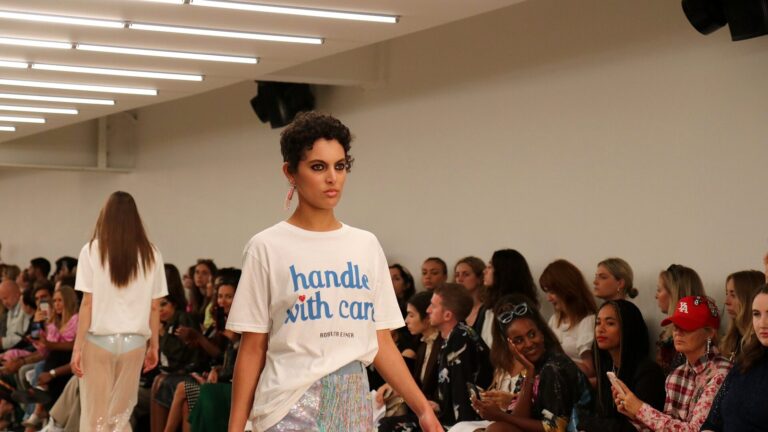
| Emerging designers and school-connected talent | Zurich has a growing platform moment. Zurich Fashion Week 2026 announced a focus on emerging and established Swiss designers, local education, and sustainability days. | Who uses the platform to say something specific, not just to look “international.” | Curious readers who enjoy discovering a designer before the rest of the room catches up. | Events create attention; identity is proven after the event, when the work keeps developing. |
Why Zurich Design Feels Different
The mistake outsiders make is looking for a fashion capital in miniature. Zurich is not that. It does not have the chaos, scale, or theatrical street presence of Paris. It does not have Milan’s industrial fashion confidence. It does not have Berlin’s huge nightlife mythology, although Zurich absolutely has its own subcultural intelligence if you know where to look.
Zurich’s power is concentration. The city is small enough that creative fields touch. A designer can be near a photographer, a graphic studio, a musician, a sustainability researcher, a textile school, a shop owner, and a buyer without needing a giant ecosystem to arrange the meeting. That proximity matters. It gives local fashion a texture that is less runway-only and more cross-disciplinary.
It also creates a special kind of pressure. In a bigger fashion city, a designer can live inside fashion language. In Zurich, the work has to convince people who may care about design but are not easily seduced by fashion theatre. The garment must justify its existence. I find that brutal in a good way. It removes a lot of lazy romance.
This is why the strongest Zurich fashion designers often share three traits: they respect materials, they edit hard, and they leave space for the wearer. Even when the clothes are colourful or eccentric, the best pieces do not swallow the person. They invite a person to become more visible.
The Sara Schaer Lesson: Sustainability Is A Structure, Not A Slogan
Sara Schaer is useful because her brand language makes the local logic very clear. Her own about page describes the label as an independent, mindful and sustainable Swiss fashion brand based in Zurich, founded in 2018 by Sara Camenzind Schaer. It also notes her background as a fashion designer and buyer for Swiss brands, plus her teaching role in fashion design.
That combination matters. A designer who has worked inside buying understands what happens when clothes become inventory, discounts, overproduction, and dead stock. A designer who teaches understands process. And a designer who chooses low quantities, deadstock fabrics, and Swiss manufacturing is not only making an ethical claim. She is accepting constraints that shape the garment.
This is where I want readers to become more demanding. Do not reward a local label simply for using nice words. Ask how the values affect the piece. If a brand says “slow,” does the collection actually feel edited? If it says “sustainable,” can you see that in quantities, fabric use, production rhythm, or repair logic? If it says “timeless,” does the design have enough character to avoid becoming bland?
The best sustainable Zurich label does not make you feel guilty. It makes you feel calmer and sharper. It gives you the pleasure of choosing less without feeling punished. That is why I often connect designer shopping with my guide to sustainable fashion brands in Zurich and the more practical route through ethical fashion Zurich. The goal is not purity. The goal is a wardrobe that starts behaving like it belongs to your actual life.
The Julian Zigerli Lesson: Joy Can Be Serious Design
Zurich has a reputation for restraint, which is fair, but incomplete. The city also has a dry, odd, occasionally very mischievous humour. Julian Zigerli matters in that conversation because he makes the case for joy without surrendering design intelligence. His clothes can feel bright, witty, soft, sensual, graphic, or openly playful. That does not make them unserious. It makes them brave in a city where many people dress as if they are trying not to disturb the furniture.
I like a designer who gives people permission to be more alive. Zurich needs that permission. A printed shirt, a strange colour, a relaxed silhouette, or a cheeky motif can act like a social opener. It changes how the room reads you. The trick is to avoid confusing joy with novelty. Novelty expires quickly. Joy with construction can stay.
If your wardrobe is built around black coats, navy trousers, white shirts, and careful shoes, a playful Zurich designer piece can be the one thing that releases the whole outfit. You do not need a costume. You need a controlled interruption. That is the sweet spot: one piece that makes people smile, but still looks intentional when you are buying coffee, going to dinner, or standing under Zurich rain with your tram late by six minutes.
The Julia Seemann Lesson: Sometimes The Best Fashion Questions The Calendar
Julia Seemann brings a different kind of energy. The Swiss Design Awards page on her work notes that she publicly questioned the biannual fashion calendar and looked for ways to present and distribute projects outside the established system. It also describes a collaboration that included handcrafted garments and accessories made with damaged second-hand clothing and leftover fabric scraps.
That is a very Zurich kind of rebellion: less red carpet, more system critique. I find it important because fashion culture often reduces designers to “new collection, new collection, new collection,” as if creativity were a factory schedule with better lighting. A designer who questions that rhythm is not being difficult. She is asking whether the system still serves the work.
For readers, the lesson is liberating. You do not have to consume local design only as a shopper. You can follow it as a cultural conversation. You can ask why something was made, how it was shown, what materials it rescued, what calendar it refused, and what kind of body or mood it imagines. That turns fashion from a purchase into a way of reading the present.
How To Spot Real Identity In A Zurich Label
Real identity is not the same as a clean logo, a nice Instagram grid, or a poetic sentence about craft. Those things can help, but they are not enough. I look for repetition with evolution. A designer should return to certain obsessions over time, but not repeat them lazily. Maybe the obsession is volume. Maybe it is textile rescue. Maybe it is humour. Maybe it is modular bags, local production, gender fluidity, technical fabric, or a certain Swiss calm.
When the obsession keeps developing, you are seeing identity. When every collection feels like a different trend report, you are seeing survival mode.
Here is my favourite question: what would this label refuse to make? A strong designer has boundaries. Not moral superiority, just taste. A Zurich label with real identity might refuse huge anonymous production, fake scarcity, plastic glamour, trend-chasing colour, or a shape that looks good in a campaign but miserable on a body. Refusal is underrated. It is often where style begins.
This is also why Zurich’s quieter design language connects naturally with quiet luxury Switzerland, although the two are not identical. Quiet luxury can become a rich-person uniform if it loses soul. Zurich designer identity, at its best, keeps the soul: the maker’s hand, the constraint, the experiment, the local weather, the material intelligence.
The Happy Part: Local Design Makes Getting Dressed More Personal
Here is the part I wish more fashion writing admitted. A good designer piece can make you happier, not because it solves your life, but because it gives your day a small point of contact with imagination. You button a jacket and remember somebody decided that line should sit exactly there. You carry a bag and know the material had another life before this one. You put on a shirt with a print that makes no sense to everyone and perfect sense to you. That is intimate.
Zurich style can become too controlled if we let it. Too many neutral coats, too many expensive basics, too many people dressed as if they are applying for permission to exist tastefully. Local designers can break that spell. They remind us that clothes are not only about status or suitability. They are also about evidence: evidence that someone paid attention, evidence that you chose, evidence that daily life still deserves beauty.
This is the emotional reason to care about Zurich fashion designers. They make the city feel more authored. They turn the wardrobe from a set of solutions into a small archive of encounters: a studio visit, a pop-up conversation, a fabric you touched twice before deciding, a piece you bought slowly, a garment you repaired instead of replacing.
A Better Way To Buy From Zurich Designers
If you want to support local labels without turning your wardrobe into an expensive experiment, buy with a plan. Zurich design is not cheap, and it should not be treated like impulse shopping. The point is not to buy everything local. The point is to let one or two local pieces carry more meaning, wear, and pleasure.
- Start with the wardrobe gap that keeps repeating. Maybe you always lack a jacket that works with dresses and trousers. Maybe your bags are practical but boring. Maybe you need a top that makes dinner feel like dinner.
- Choose one designer direction. Calm tailoring, joyful print, conceptual reuse, Swiss textile craft, or everyday utility. Do not ask one garment to be every personality at once.
- Try it against your real clothes. If a designer piece only works with imaginary outfits, wait. The right piece should unlock what you already own.
- Check the maintenance story. Can you clean it? Repair it? Wear it often enough? A delicate piece can be worth it, but only if you accept the relationship.
- Let the price slow you down. Slowness is not a problem. It is part of the education.
If you are visiting the city and want the wider context before you shop, my Zurich fashion guide gives the big orientation. If you want the social ecosystem behind the clothes, read the Zurich fashion scene guide. This post is narrower on purpose: it is about the labels and the design intelligence behind them.

Mini Exercise: Build Your Zurich Designer Mood
Choose one answer in each line. At the end, you will know which local designer direction to explore first.
- Your ideal compliment: “That looks beautifully made” / “That is so you” / “Where did you find that?”
- Your fabric instinct: crisp cotton or wool / soft jersey or knit / unexpected leftover or textured material
- Your Zurich day: meeting and dinner / lake and gallery / studio, market, and late tram
- Your risk level: quiet cut / bright detail / strange silhouette
If you chose mostly first answers, start with calm local tailoring, refined material, and low-logo pieces. If you chose mostly second answers, look for playful designers who bring colour and humour into wearable shapes. If you chose mostly third answers, follow conceptual, recycled, or system-critical work, even when it is less immediately commercial. The best wardrobe is not the one with the most correct pieces. It is the one where your choices start sounding like you.
What I Want Zurich To Do Next
I want Zurich to stop apologising for not being a classic fashion capital. The city’s limits are part of its voice. Smallness can create accountability. High costs can force clarity. Understatement can sharpen detail. The absence of a giant fashion machine can leave room for artists, educators, shop owners, and young designers to build something stranger and more honest.
But I also want more courage. More visible local retail support. More storytelling from studios. More collaboration between designers and cultural spaces. More fashion criticism that does not sound like a press release. More events where sustainability is not a side panel but a design standard. More joy. More risk. More clothes that make a woman on a tram look twice and think, “Wait, that is interesting.”
Zurich does not need to become louder to become better. It needs to become more legible. The talent is there. The customer is there. The cultural tension is there. What we need is sharper attention, and that starts with how we look.
My Shortlist For Reading A Zurich Label
Before you buy, save, follow, or dismiss a Zurich designer, ask these five questions:
- What is the designer’s recurring obsession?
- What constraint makes the work stronger?
- Does the garment feel specific without relying on a logo?
- Can I imagine wearing it at least thirty times, or loving it as a true special piece?
- Does it make Zurich feel more alive to me?
That final question is emotional, but I trust it. Good local fashion changes the city a little. It makes the streets less anonymous. It makes craft visible. It makes getting dressed feel less like compliance and more like participation.
FAQ
Who are the Zurich fashion designers to know first?
Start with designers and labels that show a clear point of view rather than only a polished brand surface. Sara Schaer is strong for slow, local, deadstock-based design; Julian Zigerli is important for playful Zurich identity; Julia Seemann is valuable for a more conceptual, system-questioning approach. After that, watch emerging designers connected to local schools, pop-ups, and Zurich Fashion Week.
Are Zurich fashion designers expensive?
Often, yes, especially compared with mass-market fashion. Local production, small quantities, better materials, and independent studio work cost more. The smarter question is not whether a piece is cheap, but whether it has enough design, wearability, and emotional value to earn a long place in your wardrobe.
How is Zurich design different from Swiss fashion in general?
Swiss fashion is the broader national picture, while Zurich design has a more urban, interdisciplinary character. Zurich designers often sit close to art, graphics, music, sustainability, retail, and education. That mix gives the city a design language that can be calm, practical, playful, conceptual, and slightly strange at the same time.
Where should I discover local Zurich labels?
Look at designer studio stores, carefully curated independent boutiques, fashion pop-ups, local design events, and the emerging Zurich Fashion Week platform. Also follow the designers directly. In Zurich, some of the best discoveries happen through small drops, collaborations, and temporary presentations rather than giant retail launches.
How do I avoid buying a designer piece I will not wear?
Try the piece against your real wardrobe, not your fantasy wardrobe. Ask what it works with, how often you can wear it, whether it can be cared for, and whether it still feels like you without the shopping excitement. A good Zurich designer piece should make your wardrobe more personal, not more complicated.