Bahnhofstrasse Street Style: What Zurich Wears in 2026
Last updated: July 19, 2026.
Bahnhofstrasse street style has a reputation it never asked to defend: grey coats, quiet money, zero surprises. The reputation is about a decade out of date. I have spent more hours watching this street than I will ever admit to a therapist — waiting for trams, nursing coffees, pretending to window-shop — and the version I see does not match the guidebook version. This is my field report.
The short version first. The colour discipline is real, and the logo allergy is even stronger than visitors expect. But the street’s feet have changed, and the change keeps a schedule. Weekday mornings still belong to leather soles. Saturday belongs to sneakers — and the sneaker, more often than seems statistically polite, is an On.
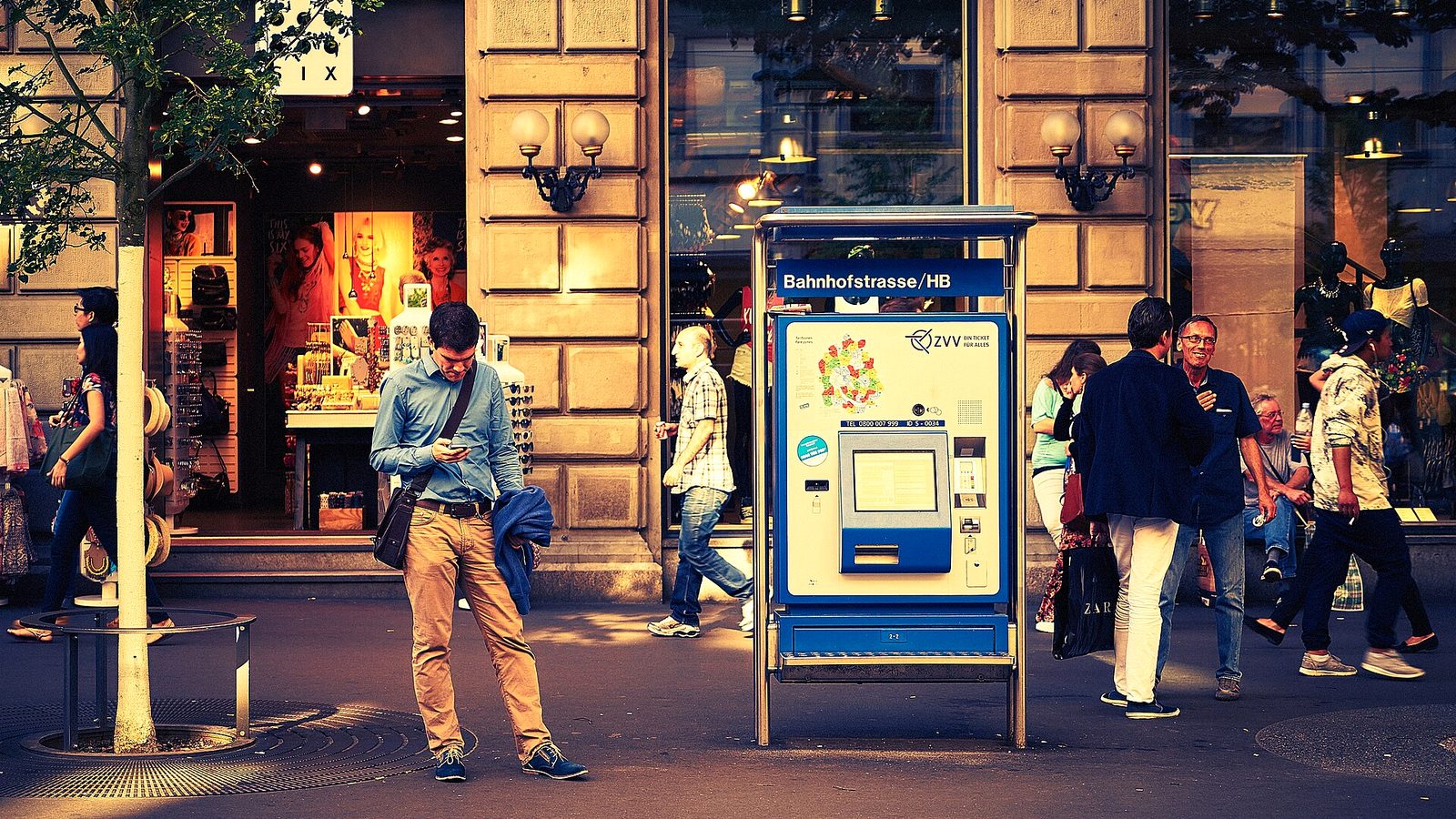
How I read this street
People-watching sounds passive. Done properly, it has rules. I always watch from a fixed spot — the Paradeplatz end, the stretch near Augustinergasse, or the pavement close to the main station — because walking changes what you notice. And I track the same five signals every time, so my impressions stay comparable from one visit to the next.
| Signal | What I look at | What it tells you |
|---|---|---|
| Footwear | Sneakers, loafers, leather soles, sandals | The real formality level, faster than any garment |
| Colour | The largest visible garment | How strictly the neutral code is being obeyed |
| Logos | Anything readable from two metres | Whether money is whispering or advertising |
| Bags | Tote, backpack, crossbody, designer piece | Who is working and who is wandering |
| Tailoring | Suits and structured blazers | How close you are standing to a bank |
One honest caveat before the observations: I cannot tell a tourist from a local by sight, and neither can you. So treat everything below as a portrait of the street, not a portrait of Zurichers. The street is the more interesting subject anyway.
Sneakers took the street, but on a schedule
If you still picture Bahnhofstrasse street style as a leather-sole parade, the parade has moved. Actually, moved is the wrong word. It shrank to a timetable. Watch at 8am on a Tuesday and polished leather still owns the pavement between Paradeplatz and the banks. Watch on Saturday afternoon and sneakers dominate so completely that a leather sole reads as a statement.
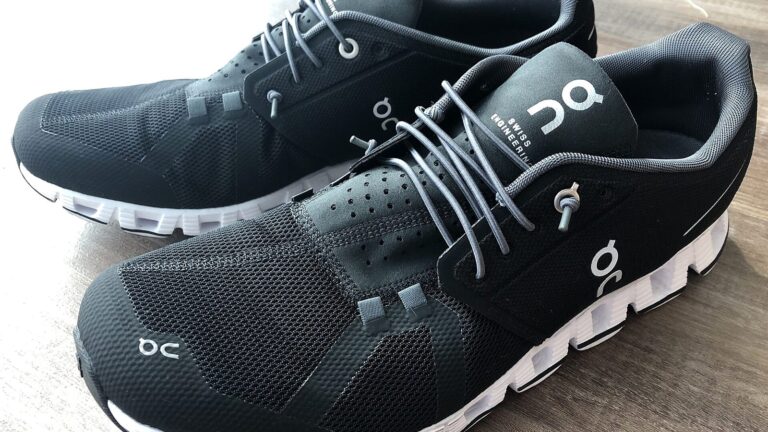
The brand mix is the part visitors never expect. White leather classics are everywhere, Adidas holds its usual ground, but the shoe I see most — by a margin that stopped surprising me sometime last year — is On, the Zurich brand with the hole-punched soles. On its home street, it feels less like a trend and more like a uniform nobody agreed to out loud. I would call it local patriotism, except nobody in this city would admit to patriotism through footwear.
Sandals appear in June and behave themselves. Heels are rare enough to make me look up. And every summer produces at least one man in hiking sandals with socks who clearly could not care less, and honestly, I respect it.
The street in three moods — tap to switch
My impression index, 0–10. Watched, not counted — the counted version is coming (see the census section below).
Weekday morning: tailoring 8 of 10, sneaker energy 3, colour 2, visible logos 1. Weekday lunch: tailoring 6, sneaker energy 5, colour 3, visible logos 2. Weekend: tailoring 2, sneaker energy 9, colour 4, visible logos 2.Toggle through the three moods above. Footwear is where the street loosens; logos and colour are where it stays conservative in every mood. That contrast is the whole story of modern Bahnhofstrasse street style, and the weekly rhythm makes it easiest to see.
The week has a shape: suits fade, sneakers rise
Bahnhofstrasse street style through the week
My impression index, 0–10, from years of watching — not a measurement.
Sneaker energy impression: Monday morning 3, Wednesday lunch 5, Friday evening 6, Saturday afternoon 9, Sunday morning 7. Tailoring impression: Monday morning 8, Wednesday lunch 6, Friday evening 5, Saturday afternoon 2, Sunday morning 2.Sketched as a curve, my read of the week looks like the chart above: the two lines cross somewhere around Friday evening. Tailoring owns Monday morning and slides toward the weekend. Sneaker energy climbs the opposite slope and peaks on Saturday. Sunday sits in between — calmer than Saturday, far looser than any weekday, which fits the slower, coffee-paced crowd.
My conclusion after enough of these cycles: this is not one street with one dress code. It is a weekday street and a weekend street sharing the same shop windows. The banks set the Monday tone from Paradeplatz — the Zurich business dress code radiates outward from that square — while the weekend belongs to people dressing for trams and pavement rather than meeting rooms. Honestly, the gap between Monday-Bahnhofstrasse and Saturday-Bahnhofstrasse feels bigger than the gap between some Zurich districts.
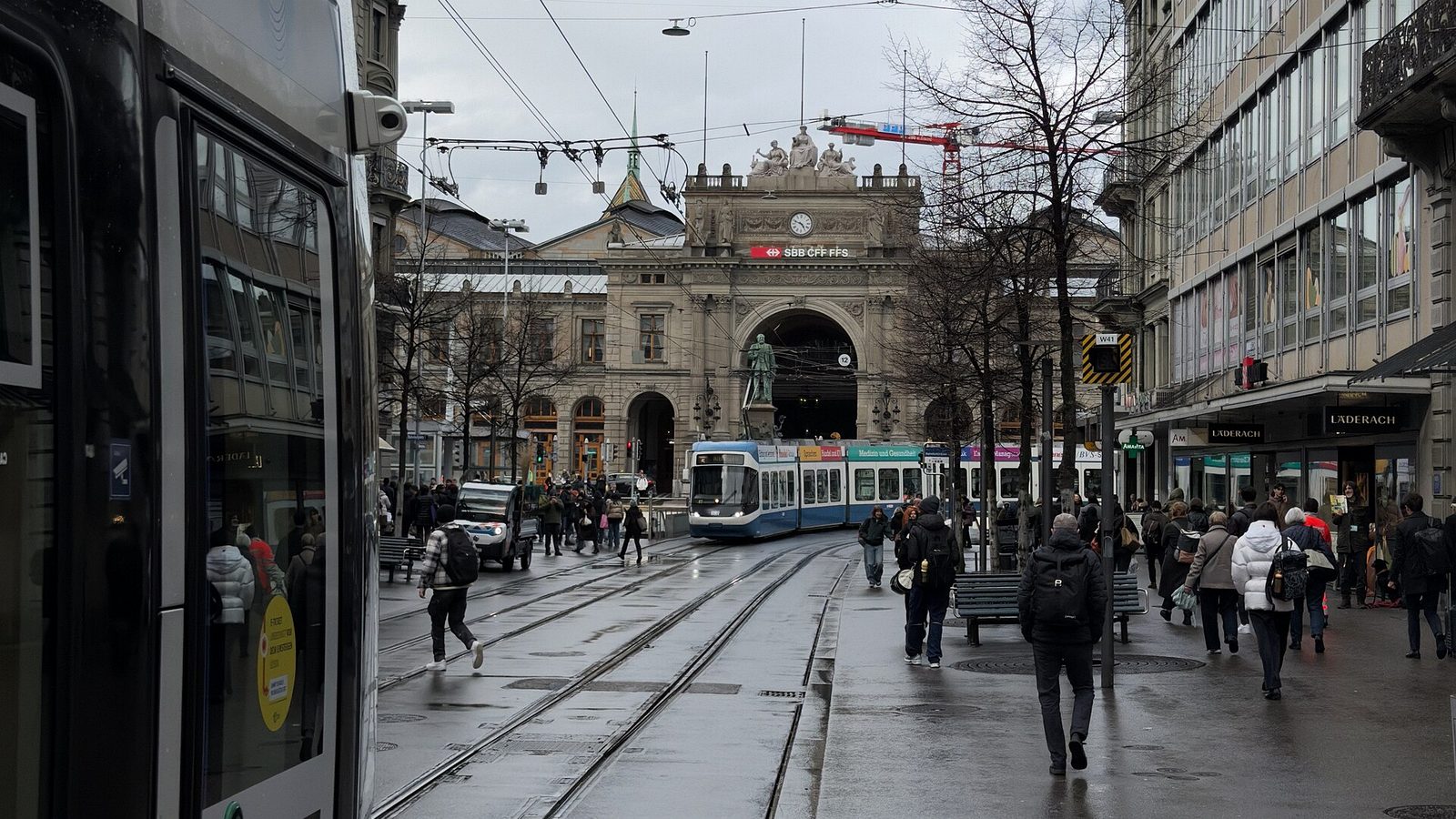
Logos are nearly extinct here
Here is a game for your next visit. Stand at any Bahnhofstrasse tram stop and try to spot a large, readable logo on a person rather than a shop. You will wait longer than you expect. Before you scroll on, guess the rarest sight of my last long afternoon on the street.
On the most expensive shopping street in Switzerland, what was the rarest thing I spotted on a person all afternoon?
The overwhelming majority of people show no readable branding at all from two metres. A minority wear something discreet — a small crocodile, a stitched wordmark, hardware you would need to squint at. Logos doing actual advertising work are a rounding error, and half of those are on tourists photographing the shops that sell them. On Bahnhofstrasse, the merchandise shouts and the customers whisper.
This is quiet luxury as a lived habit rather than a trend piece. The money on this street prefers fabric, cut and a good shoe to a monogram, and it has preferred them since long before the phrase had a hashtag.
The colour discipline holds, mostly
Footwear loosened. Colour did not. In colour terms, Bahnhofstrasse street style is a gradient from navy to beige with occasional interruptions, and the gradient barely acknowledges the seasons. Summer shows up as cream trousers and off-white shirts, not as actual colour.
| Colour family | How often I see it | Where it shows up most |
|---|---|---|
| Dark neutrals (black, navy, grey) | Everywhere, every day | Coats, knits, tailoring, the default answer |
| Light neutrals (beige, cream, white) | Constant, peaks in summer | Trousers, shirts, trench coats |
| Muted colour (olive, rust, dusty blue) | Occasional | Knitwear, scarves, the brave middle ground |
| Saturated colour (red, cobalt, yellow, pink) | Rare, and memorable | One garment at a time, worn with intent |
When true colour appears, it appears alone — one cobalt blazer against an otherwise neutral outfit, worn by someone who looks extremely pleased about it. The street does not punish colour. It just makes colour do all the talking by itself, which is why so few garments volunteer.
If you are packing for a visit and want to read the room first, the room runs beige to navy; my guide to how people dress in Zurich covers the why. Wear colour anyway if colour is yours. The street can use the interruption.
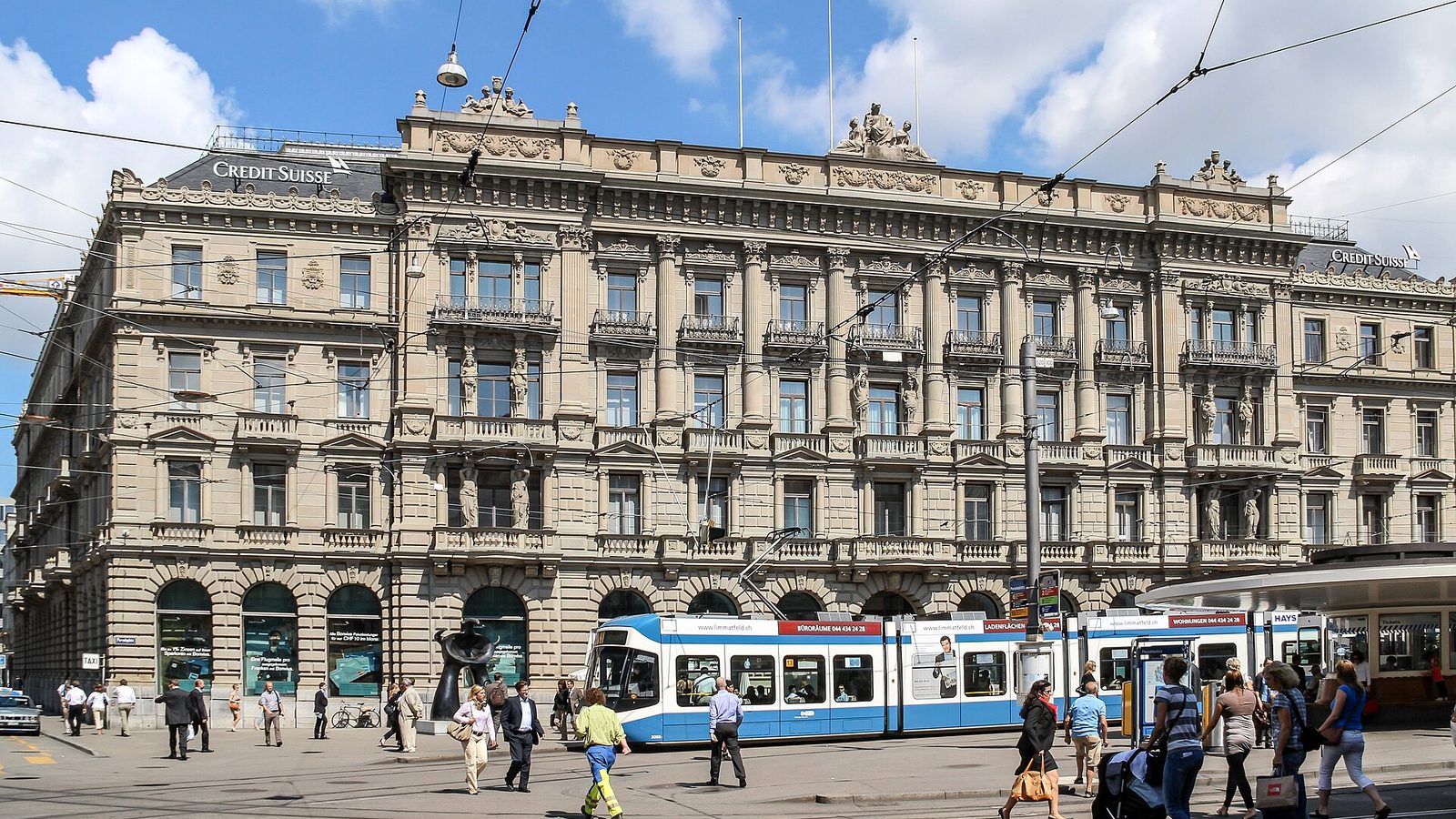
Bags separate the workers from the wanderers
Clothes tell you the day of the week. Bags tell you why each person is there, and no piece of Bahnhofstrasse street style splits workers from wanderers more cleanly.
| Bag | Who carries it | When you see it |
|---|---|---|
| Leather tote or shoulder bag | People with somewhere to be | Weekday mornings, walking fast |
| Backpack | Commuters — Freitag flaps and QWSTION canvas, not school nylon | Rush hours, both directions |
| No bag at all | Wallet-phone-done minimalists | Early weekdays, lunch breaks |
| Crossbody | Strollers and visitors | Afternoons and weekends |
| Structured designer bag | The deliberate dressers | Saturday, near the station end, among the paper shopping bags |
The backpack’s rise would have been unthinkable on this street twenty years ago. Now it is completely normal on a tailored coat, provided the backpack behaves — muted colour, clean lines, no dangling charms. After enough watching, I started guessing each person’s bag before it came into view. Right often enough to feel smug, wrong often enough to stay humble.
What this says about Zurich style
Here is my one-sentence conclusion: Bahnhofstrasse is loosening from the feet up while holding the line everywhere else. Sneakers took the street, yet colour and logos have not moved an inch. That combination — casual shoes under disciplined clothes — might be the most Zurich outcome possible. Comfort won, but quietly, and in navy.
It also means the street’s reputation runs about a decade behind its pavement. The guidebook version of Bahnhofstrasse street style — bankers, leather soles, grey wool — survives for roughly one hour on weekday mornings. The rest of the week belongs to good sneakers, neutral knits and bags built for laptops. Dress for the guidebook and you will look like you read it.
The shop windows will still try to sell you the formal version, of course. My Bahnhofstrasse shopping guide covers which windows deserve your attention and which deserve a polite nod.
Next: I am turning these impressions into numbers
Everything above is trained observation, and I stand behind it. But impressions deserve a stress test, so I am running a proper Bahnhofstrasse street style census: five sessions across the week, a fixed spot each time, the first 100 adults to pass, five tallies per person — footwear, dominant colour, logo visibility, bag type and tailoring. No photos of anyone, no exceptions, 500 people in total.
When the counting is done, this page gets its update: exact percentages, session-by-session charts, and a verdict on whether my sneaker instincts survive contact with arithmetic. The method is free to steal in the meantime. Run it on Marktgasse in Bern, on the Limmatquai, on your own high street, then send me the tallies — if enough streets report in, the comparison post writes itself.
FAQ: Bahnhofstrasse street style
What do people actually wear on Bahnhofstrasse?
Neutral colours, almost no visible logos, and increasingly sneakers. The classic formal look — tailoring and leather soles — still dominates weekday mornings near Paradeplatz, while weekends run casual: good sneakers, neutral knits, backpacks and shopping bags.
What shoes are most common on Bahnhofstrasse?
Sneakers have become the default, which makes them the base layer of current Bahnhofstrasse street style. White leather classics are constant, and On — the Zurich-born brand — is the single most visible label on its home street. Leather dress shoes now cluster around office hours.
Do people wear visible designer logos in Zurich?
Rarely. Most people on Bahnhofstrasse show no readable branding at two metres, and what branding exists tends to be discreet: small emblems, stitched wordmarks, subtle hardware. Large logos are the exception, which fits the city’s quiet-luxury habit of spending on fabric rather than monograms.
When is Bahnhofstrasse most formal?
Weekday mornings, roughly 8 to 9am, at the Paradeplatz end. That is when tailoring peaks and sneakers thin out. By Saturday afternoon the street flips: sneakers everywhere, suits nearly gone. Come early midweek if you want to see the classic version.
Is there real data behind these observations?
Not yet — this page is a field report from years of deliberate people-watching, and it says so honestly. A counted census of 500 people across five sessions is planned, and the results will be added to this page. Until then, treat the impression charts as exactly that: impressions.