
15+ African Designers in Zurich: Inside ONULI’s Pop-Up
Last updated: July 21, 2026.
For three days in October, the most interesting fashion in Zurich will not be on Bahnhofstrasse. It will be at number 200 Langstrasse, where ONULI brings collections from more than fifteen African designers into a pop-up shop — pieces flown in directly, most of them impossible to buy anywhere else in Switzerland. Entry is free, it runs 2 to 4 October, and it is worth an afternoon of anyone’s time.
But the reason I wanted to write this is bigger than a pop-up. Something has quietly shifted in how contemporary African fashion reaches European buyers, and Zurich — a city with no fashion week and a national reputation for beige — has become an unlikely part of that route. The interesting question is not “what will be on the rails.” It is why here.
ONULI in Zurich: the confirmed details
| Detail | Confirmed |
|---|---|
| What | Luxury fashion pop-up with curated collections from 15+ African designers |
| Dates | Friday 2 – Sunday 4 October 2026 |
| Times | 11:00–20:00 daily |
| Venue | L200, Langstrasse 200, 8005 Zürich |
| Entry | Free — RSVP in advance |
| On offer | Try-on, one-to-one styling from the ONULI team, meeting designers, refreshments |
| Organiser | ONULI (shoponuli.com, @onuli_official) |
The event listing describes it as more than a shopping event — pieces arriving directly from the continent, the chance to feel the fabrics and hear designers’ own accounts of their work, with Afrobeats and drinks running through the day. It follows an ONULI pop-up in Geneva in September, and the company has run pop-ups in Zurich before, so this is a returning format rather than a first attempt.
Who ONULI actually is, and why that matters
ONULI describes itself as Switzerland’s home for African fashion: a curated online marketplace and a quarterly print magazine, based here, selling designers from across the continent to European buyers. Its own catalogue is organised by country — Nigeria, Ghana, Kenya, Côte d’Ivoire, Botswana, Togo — alongside the UK and Switzerland, which is a useful corrective in itself. “African fashion” is not a style. It is a continent of fifty-four countries with entirely distinct textile traditions, and a good marketplace makes that visible rather than flattening it.
The brands are not obscure. Several labels ONULI works with — Cute Saint, Jermaine Bleu and M.O.T among them — showed at Lagos Fashion Week, which marked its own fifteenth anniversary in 2025 and now functions as one of the more closely watched fashion weeks outside the traditional four. One ONULI piece, a suit called Bird of Paradise, appeared on the red carpet at the Berlin Film Festival. This is not craft-fair merchandise. It is contemporary designer fashion that happens to be produced somewhere European retail has been slow to source from.
The positioning is explicitly slow: limited-edition drops, small batches, sustainably crafted, woman-owned. Which brings me to the argument this article is really about.
Why Zurich, of all places, is a plausible gateway
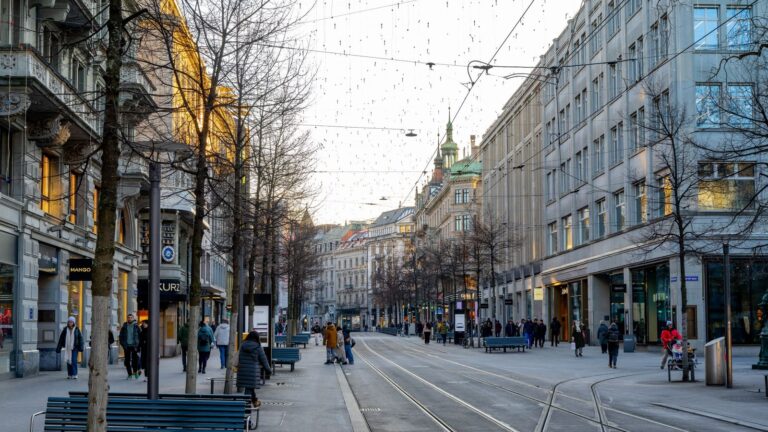
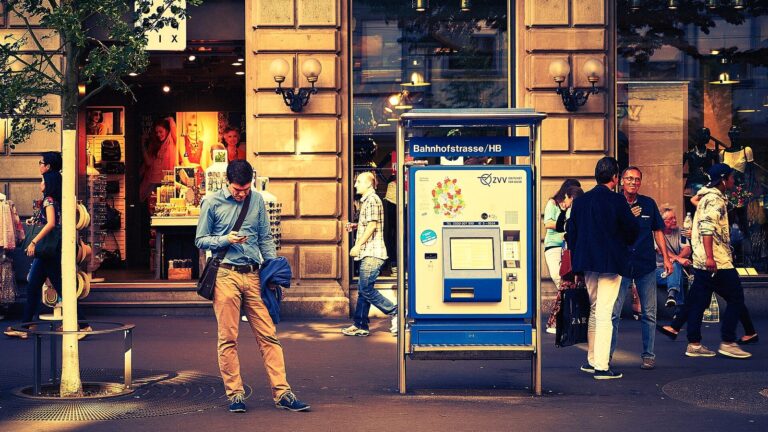
On the surface, Zurich is a strange entry point for African designers. It has no fashion week, a small domestic market, and a dress culture I have described repeatedly as allergic to display — my Bahnhofstrasse field report found a street that dresses almost entirely in neutrals with barely a visible logo in sight. Bright print-led design should, in theory, land badly here.
Except the values underneath match almost exactly. Look at what ONULI sells on: small production runs, artisanal making, material quality, garments meant to last and be treasured rather than replaced. Now look at what this blog has spent months documenting about Swiss taste — quiet luxury as a preference for substance over signalling, a silk industry and an embroidery industry that survived by abandoning volume and keeping only excellence in the material.
Those are the same commitments described in two different visual languages. A Zurich buyer who has been trained by this city to pay attention to how something is made, and to spend accordingly, is unusually well prepared to understand why a hand-finished, small-batch piece from Lagos or Accra costs what it costs. The colour is the unfamiliar part. The logic is not.

The real barrier was never demand. It was plumbing.
Here is the part most coverage of African fashion in Europe misses. The obstacle has rarely been that Europeans do not want the clothes. It is that the boring machinery of retail — shipping, customs, returns, payment processing, size conversion, after-sales service — has been genuinely difficult across that route. A designer in Lagos with a beautiful collection and no European logistics partner simply cannot sell to a customer in Zürich-Wiedikon at acceptable cost and speed.
What ONULI is actually building is that plumbing: it collects from each brand, handles quality checks and international shipping through UPS, Swiss Post and DHL, runs a common sizing chart across its designers, and manages exchanges and customer service centrally. That sounds unglamorous next to a runway. It is also precisely the thing that has been missing, and the reason a pop-up in Zurich can now display pieces “arriving directly from the continent” as a normal proposition rather than a logistical adventure.
Four things that stop a great collection reaching Europe — tap one
The practical obstacles a marketplace like ONULI exists to solve.
Langstrasse is the right address, and that is not an accident
The venue tells its own story. L200 sits on Langstrasse, the spine of Kreis 4 and by a distance the most international street in Zurich — the part of the city where the grocers, restaurants, record shops and nightlife have been shaped by people who came from somewhere else. Putting a pan-African fashion pop-up here rather than in a Bahnhofstrasse showroom is a decision about who is expected to walk in.

It also fits a pattern I keep noticing this autumn. The upcycled Kapda runway is on the Sihlquai; Julian Zigerli’s anniversary show is at a Gasthaus by the Uetliberg; the interesting fashion is happening in districts 4 and 5 and on the city’s edges, not in the luxury retail core. Zurich’s fashion story has moved off Bahnhofstrasse, and the scene is better for it.
How to actually use the three days
A pop-up rewards a bit of strategy, particularly this one, where the whole point is the things a website cannot give you.
| Do this | Why |
|---|---|
| RSVP, then go on Friday or Sunday | Saturday will be busiest; a quieter room means real conversation and unhurried try-on |
| Talk to the designers | Meeting the maker is the part that is genuinely unavailable online — ask what the fabric is and where it was made |
| Try things on properly | Cut and fit vary between design traditions; the styling team is there precisely for this |
| Ask about the textile, not just the garment | Kente, aso oke, adire, bogolan and wax print are different materials with different histories and care needs |
| Buy the piece that is hard to replace | Small-batch means the exact thing in front of you may not exist again — the same logic as vintage |
On what to wear: this is a room where colour and pattern are the house language, so it is a good day to leave the navy coat at home. My guide to dressing for Zurich events covers the general grammar, but the honest advice here is simpler — wear something with a point of view, because you will be surrounded by clothes that have one.
Beyond Paris and Milan
The traditional fashion capitals have spent two decades discovering African design in occasional bursts — a collaboration here, a runway invitation there, usually mediated through a European house. What is happening now is less glamorous and more durable: platforms, logistics, marketplaces, magazines, pop-ups. Infrastructure rather than moments. And infrastructure is what lets a designer in Accra treat a customer in Zurich as a normal part of the business rather than a lucky export.
Whether Zurich becomes a genuine gateway will not be settled by one weekend on Langstrasse. But the ingredients are unusually well matched: a city that already pays for craft, a buyer base trained to value material over marketing, a strong logistics culture, and now a Swiss-based platform doing the unglamorous work. Add that to the Swiss designers and slow-fashion labels already here, and the outline of something interesting appears — a small country becoming a serious European address for small-batch design from anywhere.
Three days, free entry, Langstrasse 200. Go and feel the fabric. That is the whole invitation, and it is a good one.
FAQ: ONULI pop-up in Zurich
When and where is the ONULI pop-up in Zurich?
Friday 2 to Sunday 4 October 2026, 11:00–20:00 each day, at L200, Langstrasse 200, 8005 Zürich. Entry is free with an advance RSVP, and the pop-up features curated collections from more than fifteen African designers.
Is the ONULI event free?
Yes. Entry is free and you register in advance via the event listing. Alongside shopping, the pop-up offers one-to-one styling advice from the ONULI team, the chance to meet designers, and complimentary refreshments across all three days.
What is ONULI?
A Switzerland-based curated marketplace and quarterly print magazine for African fashion, connecting designers from countries including Nigeria, Ghana, Kenya, Côte d’Ivoire, Botswana and Togo with European buyers. It focuses on slow fashion — limited drops, small batches and artisanal production — and handles shipping, sizing and customer service centrally.
What kind of clothing will be at the pop-up?
Contemporary designer fashion rather than souvenir clothing: curated collections flown in directly from the continent, from labels several of which have shown at Lagos Fashion Week. Expect womenswear, menswear, accessories and jewellery, with pieces largely unavailable elsewhere in Switzerland.
Why is African fashion growing in Switzerland?
Partly demand, but mostly infrastructure. Marketplaces now handle the logistics, customs, sizing and after-sales that previously made the route impractical for individual designers. Switzerland’s taste for small-batch, material-led, durable clothing also aligns closely with the artisanal, slow-fashion positioning of many contemporary African labels.